
Three Sundays, Many Villages: A Thanksgiving Journey Through Minahasa
25 August 2026 · Minahasa Regency · North Sulawesi
From Lolah to Ranotongkor, Tondano, Kolongan, Maumbi and Kiawa
There Are Journeys Where the Destination Is Carefully Planned.
And there are journeys where the people you meet rewrite the plan.
Our third Pengucapan Syukur journey of 2026 was supposed to follow a clear route through Minahasa Regency:
Kiawa → Maumbi → Kolongan → Tondano → Ranotongkor → Lolah → Lemoh → Tomohon.
But, as with the previous journeys, the day had other ideas.
A fuel stop changed the order.
A village church was still holding its service.
An unexpected invitation opened another door.
A former student appeared.
A friend was preparing to leave for Japan.
A familiar voice called my name in a village where I least expected to hear it.
And by the end of the day, the car was once again filled with nasi jaha, dodol and other gifts of Pengucapan Syukur.
This was not simply a journey between villages.
It became another journey through the relationships created by school, family, friendship, food and hospitality.
Section: Annual Celebrations
Category: Volume VII — The Rhythm of the Year
Experience: Pengucapan Syukur · Student Encounters · Teacher Friendships · Village Hospitality · Traditional Food · Slow Journey
Tomohon: A City Surrounded by Its Students' Villages
Tomohon occupies a special position in the middle of Minahasa.
The city is known not only for flowers, gastronomy, churches and its highland landscape, but also as a city of students.
Young people from villages throughout Minahasa come to Tomohon to study.
Many of them spend their teenage years away from their families.
They learn.
They make friends.
They grow up.
And eventually, during Pengucapan Syukur, teachers can find themselves travelling back to the villages where those students come from.
This gives the celebration another meaning.
We are not simply visiting villages.
We are visiting the homes behind our students.
The Original Plan
Our original itinerary was ambitious.
First:
Kiawa, to visit my student Anjelo of the Lonteng family.
Then:
Maumbi, to visit Fabian of the Sangian family.
After that:
Kolongan, where several students and former students live, including Mclarent and Stive, with planned visits to Marvel of the Turangan family and my former student Syalomita of the Korompis family.
Then:
Tondano, to finally visit my teacher friend Eko, after we had been unable to arrive in time for his son’s baptism the previous Sunday.
Then:
Ranotongkor, to visit our teacher friend Ezra Pangemanan.
And finally:
Lolah, to visit my former student Prayer.
We had chosen Lemoh as the last destination because it would keep us relatively close to Tomohon for the journey home.
It looked perfect on paper.
But Pengucapan Syukur is not a paper itinerary.
The First Change: Fuel Before Kiawa
Before we could follow the planned route, we needed fuel.
It was still morning.
But the fuel station already had a long queue of vehicles.
Cars were everywhere.
People were travelling.
Pengucapan Syukur was clearly in full motion.
We realized that waiting would cost us too much time.
So we changed the plan.
Instead of going first to Kiawa, we decided to visit Lolah.
And once again, the journey began by teaching us something:
sometimes the best itinerary is the one you are willing to change.
Lolah: Waiting for the Church to Finish
When we arrived in Lolah, people were still in church.
The village was not yet ready for the house-to-house rhythm of the afternoon.
So we waited.
There was no point rushing.
We found somewhere to stay in the village while the church service continued.
Eventually, the village began to move again.
And we went to visit my former student:
Prayer, of the Longdong family.
Prayer's House
As soon as we arrived, we experienced the hospitality that had already become familiar during our Pengucapan Syukur journeys.
We were welcomed warmly.
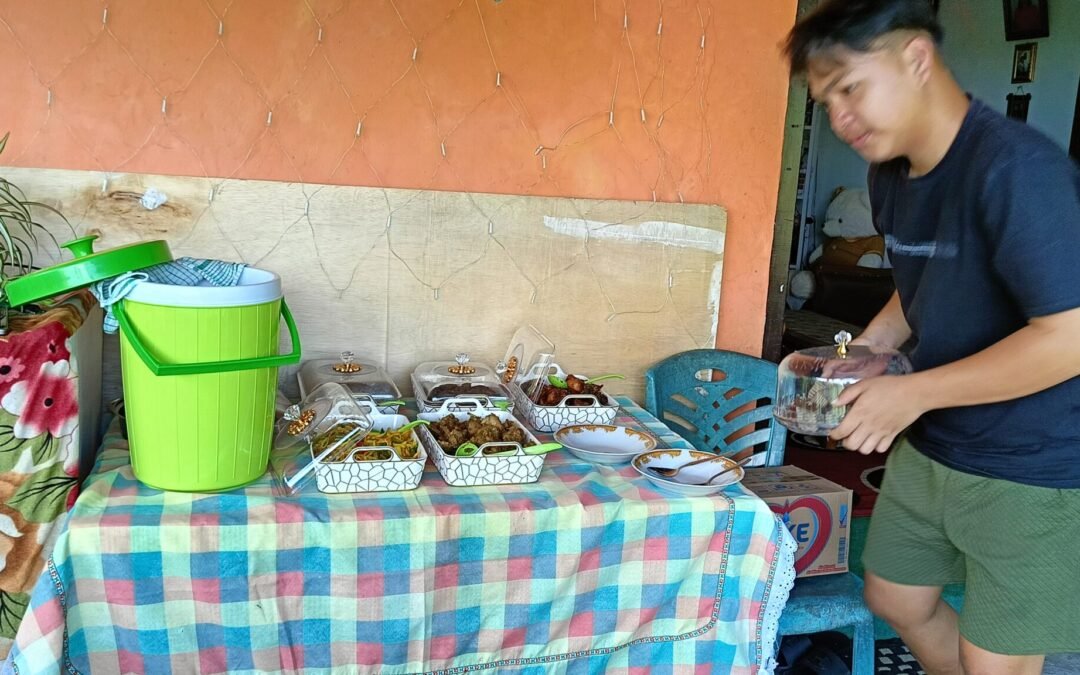
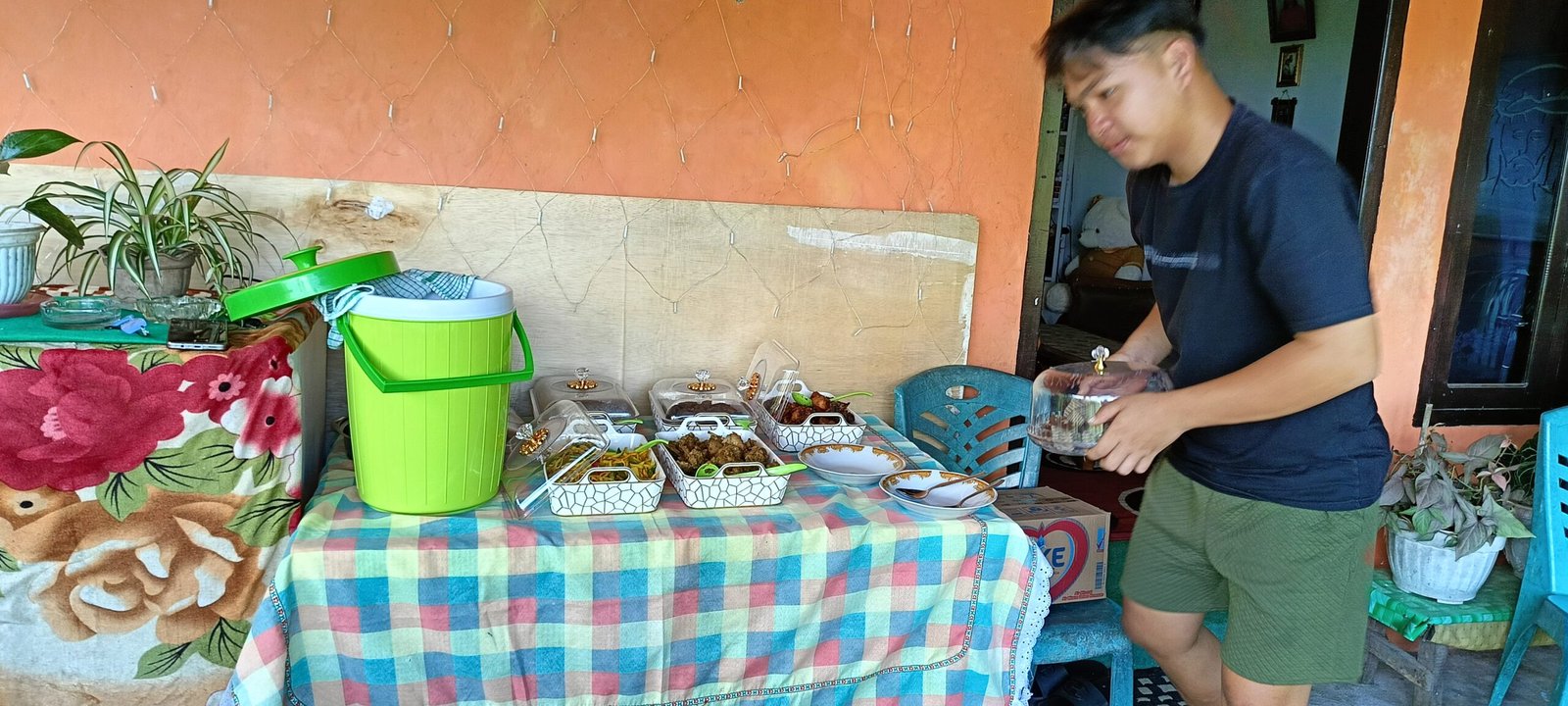
Food was prepared.
We ate.
We talked.
And, naturally, we received the gifts that had become almost a signature of this season:
nasi jaha and dodol.
But our visit to Prayer’s house was supposed to be only one stop.
It did not remain that way.
One Invitation Opens Another Door
Nearby lived another student:
Marvel, of the Pangemanan family.
We were invited to his house.
So we went.
And the feast continued.
Again there was hospitality.
Again there was food.
Again there was conversation.
And again, we were given nasi jaha and dodol to bring home.
The pattern was becoming familiar:
visit → eat → talk → receive → continue.
But it was not yet finished.
Another Former Student
Near Marvel’s house was another former student’s home.
We visited.
And once again, the welcome was generous.
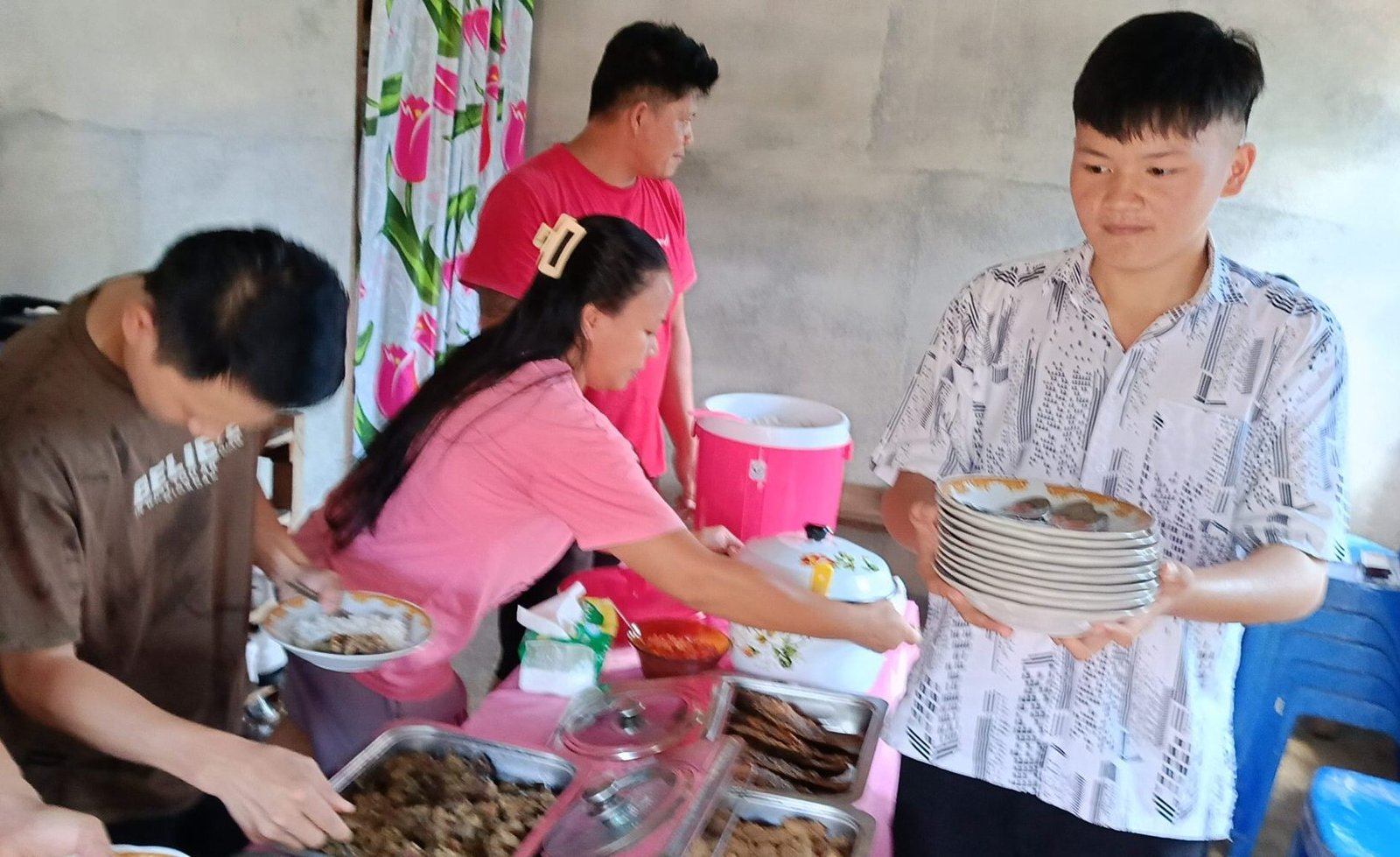
Another table.
Another meal.
Another family.
Another story.
And once again:
nasi jaha and dodol.
At this point, I began to wonder whether the car would have enough space for everything we were being given.
But refusing a gift during Pengucapan Syukur is not always easy.
The food is not merely food.
It is generosity.
It is affection.
It is a message:
“Please take something from our home with you.”
A Surprise at Ezra's House
From Lolah, we continued toward Ranotongkor to visit our teacher friend Ezra Pangemanan.
I expected another ordinary reunion with a friend.
Instead, there was a surprise.
We were not alone.
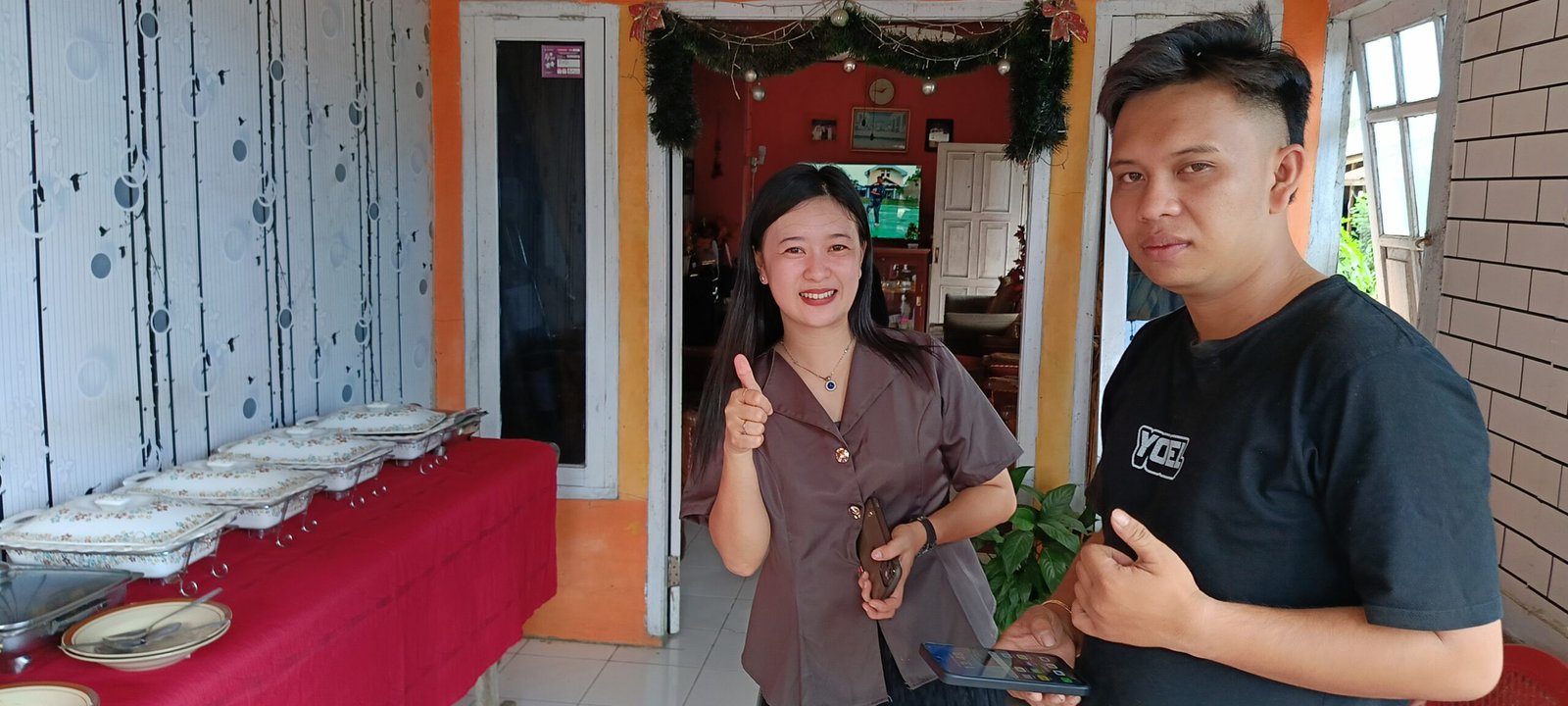
There were already visitors from Tomohon at the house.
And then one of them called my name.
I turned.
And suddenly the geography of the day became personal again.
The sister of Ezra’s mother had once been my neighbour.
She lived less than one hundred metres from my own house in Tomohon.
We had travelled into another part of Minahasa, only to encounter someone from almost next door.
It was another reminder that Minahasa is connected by relationships in ways that maps cannot show.
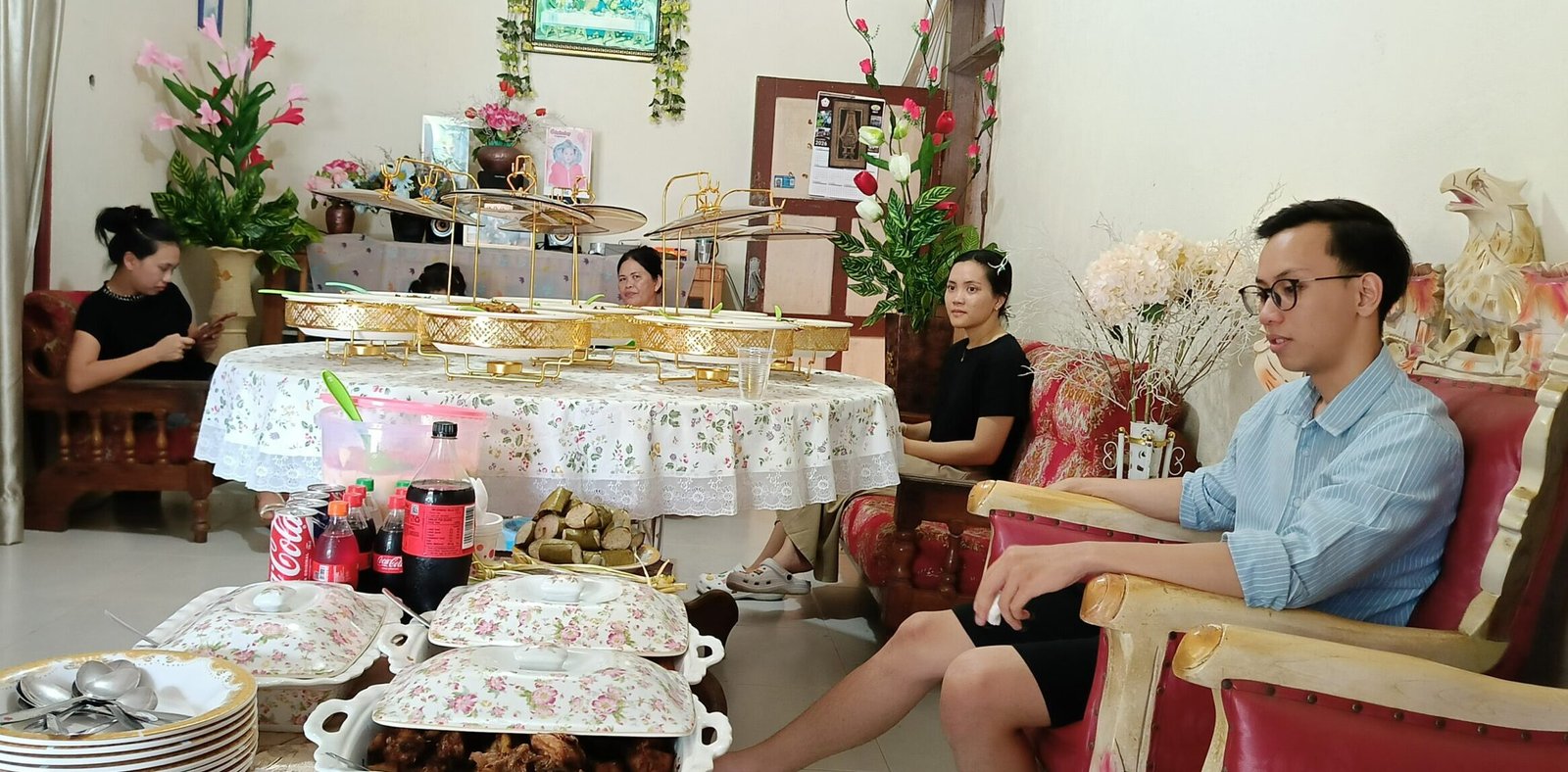
Another Table, Another Welcome
We were welcomed at Ezra’s house.
There was food.
There was conversation.
And, naturally, there were gifts.
Pengucapan Syukur had begun to feel like a continuous chain of tables.
One table led to another.
One family led to another.
One friendship revealed another connection.
Tondano: Finally Meeting Eko
From Ranotongkor, we continued to Tondano.
This was another visit that had become important because of the previous week’s journey.
The Sunday before, we had planned to attend the baptism celebration of Eko’s first son.
But we arrived around 10 p.m., after the celebration had already ended.
This time, we wanted to make sure we actually met him.
Eko lives in the church pastor’s house, because his mother is the pastor of the church.
When we arrived, the reunion felt like correcting a small unfinished chapter from the previous Sunday.
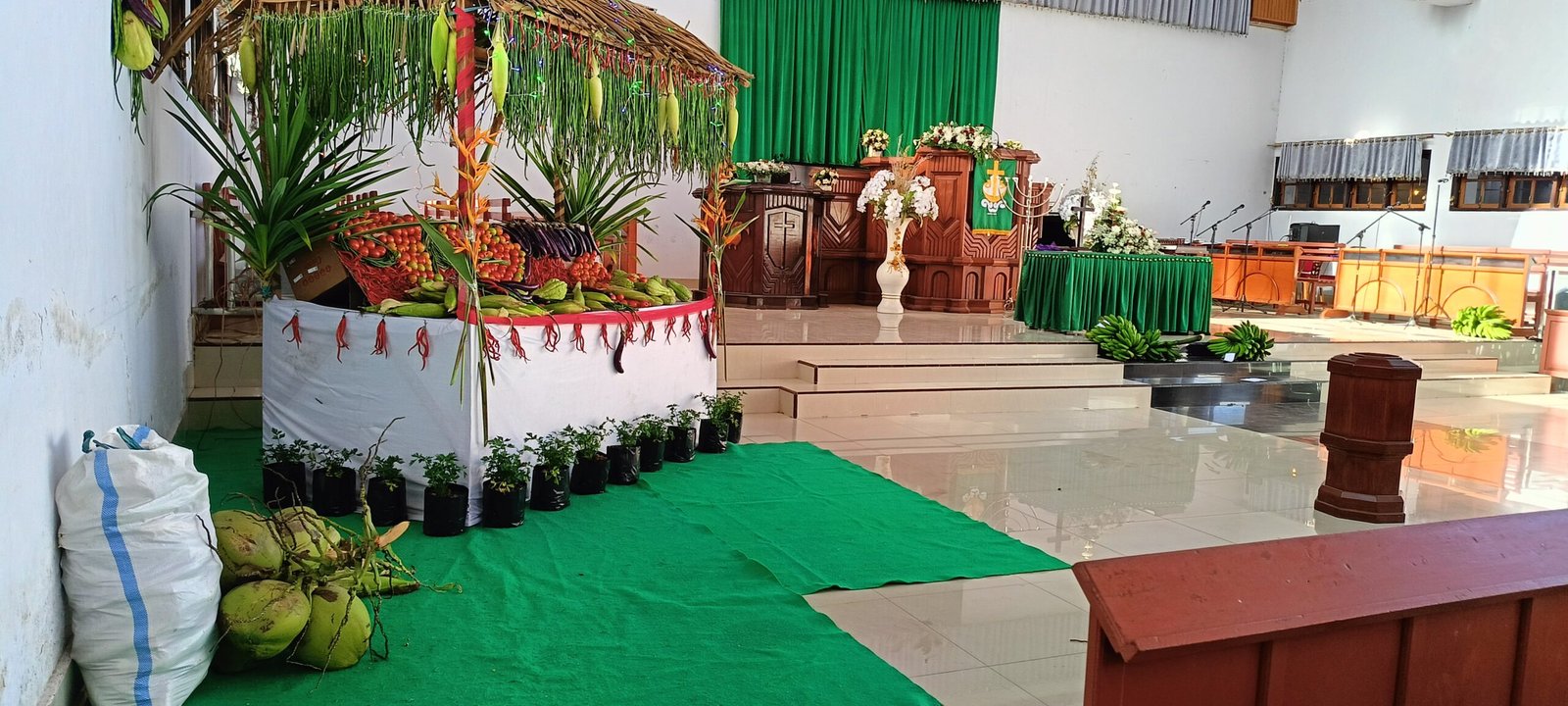
A Church Decorated With Harvest
While we were there, I took the opportunity to look inside the church.
And again, I found something that immediately caught my attention.
The church was decorated with bananas and coconuts.
Just as I had seen at Pangu during the previous journey, agricultural produce had become part of the visual expression of thanksgiving.
The harvest was present in the sacred space.
Food and faith were not separated.
They were sharing the same celebration.
From Church to Table
After seeing the church, we returned to the house.
Again there was food.
Again there was conversation.
And again, the celebration was expressed through hospitality.
It was becoming increasingly clear that the Pengucapan Syukur landscape is not simply made of villages and roads.
It is made of:
churches,
homes,
farms,
tables,
students,
teachers,
families,
friends,
and food.
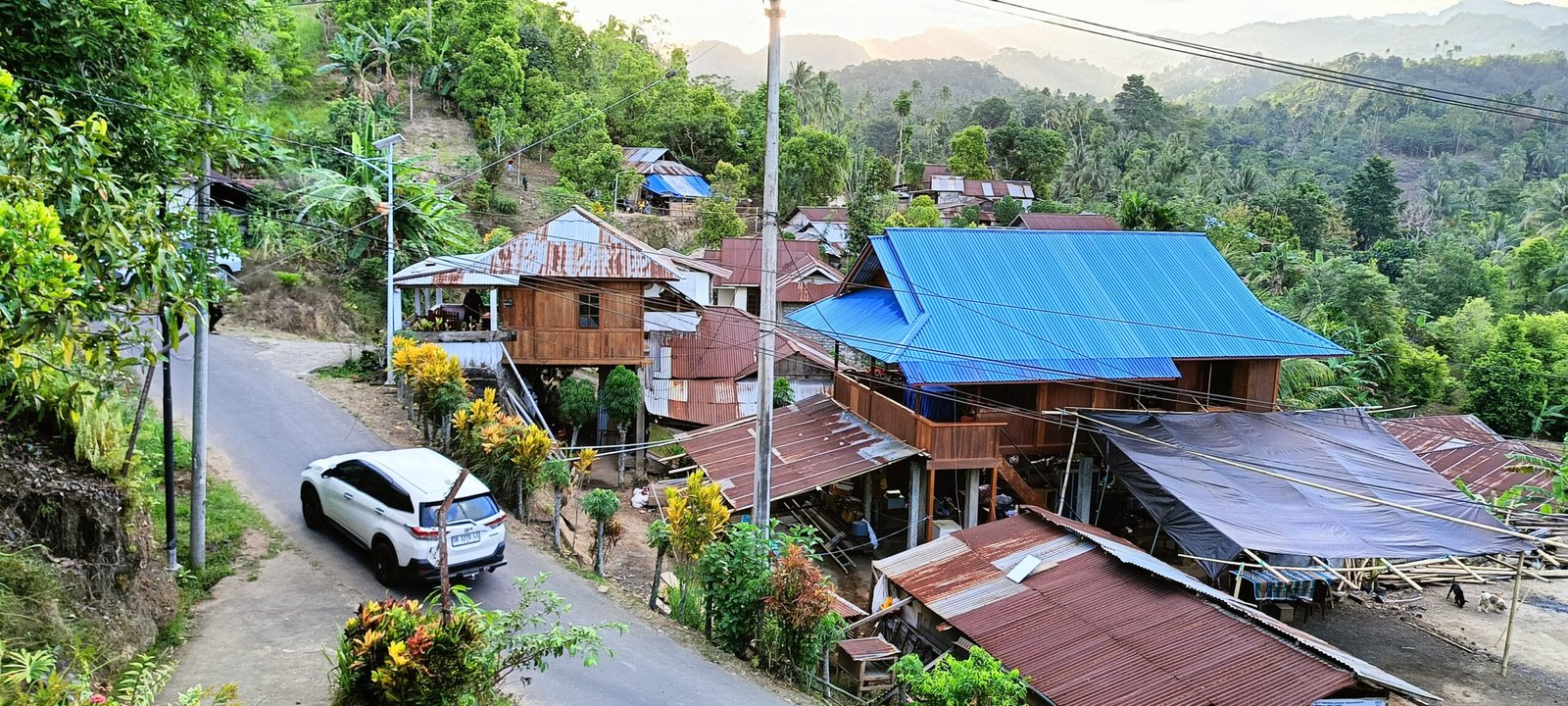
Kolongan: Mountains, Cloves and Coconut Trees
Next came Kolongan.
This village is one of my favourite places along this journey because of its landscape.
From the village, we could see mountains and agricultural areas filled with coconut and clove farms.
There were also still many traditional wooden houses.
These houses are an important part of the visual character of the village.
They remind us that Minahasa is not only a landscape of plantations and volcanoes.
It is also a landscape of architecture.
A Student About to Leave for Japan
Then came another surprise.
Mclarent arrived to join us.
Another student from the Tourism Business Industry.
And Stive, a former student, also joined.
The gathering suddenly became a small reunion of the school community.
But there was news.
Stive was preparing to leave for Japan to work.
He was scheduled to leave only two days later.
We talked about his plans.
About work.
About the future.
And then he said something that stayed with me:
“See you three years later.”
Three years.
A simple sentence.
But for a teacher, it carries many feelings.
Pride.
Hope.
A little sadness.
And the knowledge that students eventually leave the classroom and begin their own journeys.
A Mother's Journey Repeated
There was another beautiful connection at Marvel’s house.
Marvel’s mother is also a graduate of SMKS Kristen 2 Tomohon.
She studied there many years ago.
Now she was sending her own son to the same school.
The journey had come full circle.
A former student had become a mother.
And her son was now becoming a student at the same institution.
This is one of the quiet stories behind vocational education.
Schools are not only buildings.
They become part of family histories.
Syalomita's House
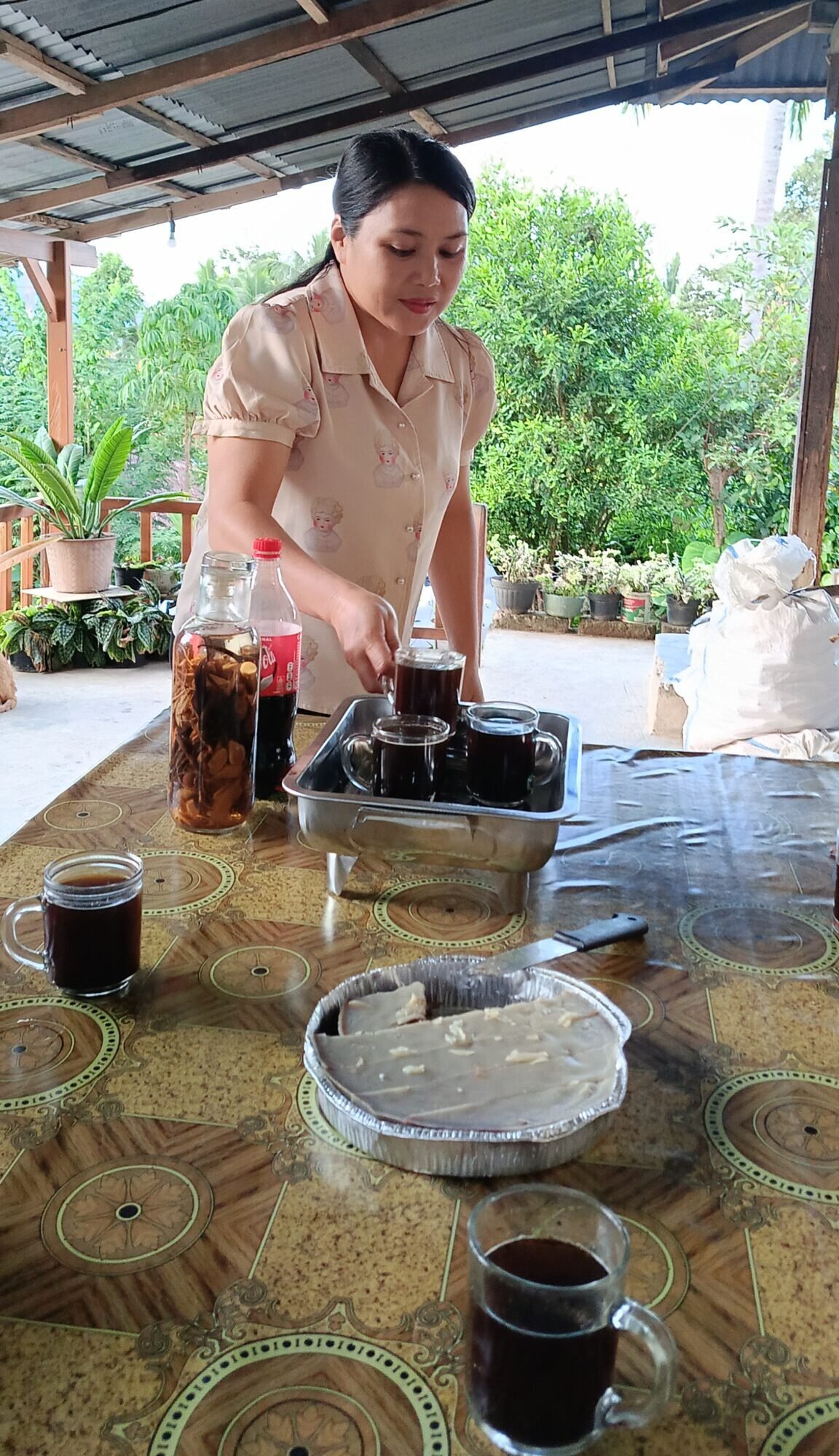
From Marvel’s house, we visited my former student Syalomita, of the Korompis family.
Her family welcomed us warmly.
Her mother even proposed preparing kepiting santan, coconut crab cooked with coconut milk.
But by this stage of the day, we were already very full.
We had eaten at several houses.
So, with some difficulty, we declined the crab.
We did not want to waste such a special dish.
Instead, we accepted their gift of nasi jaha, and possibly dodol as well.
But there is another memory from Syalomita that I will never forget.
“Terima Kasih, Meneer Alex”
I still remember Syalomita’s graduation day.
She gave me a gift box.
Inside was a note from her mother:
“Terima kasih, meneer Alex sudah membimbing Syalomita selama tiga tahun.”
Thank you, Meneer Alex, for guiding Syalomita for three years.
Those words remain meaningful to me.
Because teaching is not only about delivering lessons.
Sometimes the most important result is the trust of a family.
A Gift From Marvel's Family
Before leaving Kolongan, Marvel’s family gave us more:
nasi jaha and dodol.
Once again, the gifts were added to the growing collection in our car.
The route was becoming a journey of food souvenirs.
But more importantly, every package represented another home.
Toward Maumbi
We now continued toward Maumbi.
It was already getting dark.
Our route took us along the eastern side of Lake Tondano, passing through:
Kombi → Ranowangko → Lalumpe → Tulap → Seretan → Maumbi.
This is one of my favourite routes through Minahasa.
The villages along the way retain beautiful rural landscapes, agricultural areas and traditional wooden houses.
Even after sunset began approaching, the journey remained visually rewarding.
Fabian Was Waiting
By the time we reached Maumbi, it was dark.
But Fabian had been calling us several times.
He wanted to make sure that we would come.
Fabian is my student in the Tourism Business Industry at SMKS Kristen 2 Tomohon.
When we arrived in the village, we saw him waiting for us with his motorcycle.
He became our guide.
He led us through the village toward his family home.
His family had been waiting.
Not just for a visit.
They had been preparing a Pengucapan Syukur dinner.
A Family Waiting for Their Son's Teacher
Inside the house, I immediately noticed the affection between Fabian and his parents.
They were proud of their son.
They wanted to welcome the teacher who works with him in Tomohon.
They wanted to share their table.
And in that moment, I felt something deeply personal.
I made a quiet promise to myself:
I will take care of Fabian at school.
Nasi Jaha, Dodol and Cucur
The table was once again generous.
We ate together.
And before leaving, we received:
nasi jaha,
dodol,
and cucur.
Another family.
Another table.
Another gift.
Another responsibility.
The Last Destination Was Actually the First
By now it was around 10 p.m.
We still had one more promise to keep.
We had not yet visited Anjelo.
So we continued to Kiawa.
Anjelo is also my student in the Tourism Business Industry at SMKS Kristen 2 Tomohon.
His parents are both pastors.
The family lives in the church pastor’s house.
It was late.
Very late.
But we had promised to come.
So we went.
Kiawa at 10 p.m.
When we arrived, the village was already quiet.
But Anjelo and his family were waiting.
And once again, we were welcomed with extraordinary warmth.
A hot cup of tea had already been prepared for us.
There were other dishes waiting as well.
Among them:
Sup Brenebon
and
grilled chicken.
At 10 p.m., after an entire day of travelling and eating, another table was waiting.
And somehow, we sat down.
Because this is what Pengucapan Syukur does.
It asks you to stop.
To sit.
To share.
To listen.
Talking About Anjelo
We talked about many things.
But one conversation stayed with me.
We talked about Anjelo himself.
I learned that he had sometimes been bullied by neighbourhood friends.
But he did not respond with revenge.
He chose not to return the hurt.
That told me something about the young person sitting at the table with us.
Sometimes a teacher sees only a student’s behaviour in class.
But when you visit the family home, you discover another part of the story.
A Quiet Promise
As I listened, I thought about what it means to be a teacher.
A student may need more than lessons.
They may need someone who believes in them.
Someone who notices them.
Someone who encourages them.
Someone who reminds them that they do not have to become what others say about them.
I will remember Anjelo’s story.
And I will remember his family’s hospitality that night.
The Journey Home
Eventually, we said goodbye.
It was late.
The road home was ahead of us.
And the car was full.
Not just with passengers.
But with the generosity of Minahasa.
Nasi jaha.
Dodol.
Cucur.
Other traditional foods.
And memories from village after village.
We returned safely to Tomohon.
Tired.
Very full.
But grateful.
A Day That Changed Its Own Route
Our original plan was:
Kiawa → Maumbi → Kolongan → Tondano → Ranotongkor → Lolah → Lemoh.
Our actual journey became:
Pangu → Lolah → Ranotongkor → Tondano → Kolongan → Maumbi → Kiawa → Tomohon.
The difference looks simple on a map.
But behind every change was a reason.
A fuel queue.
A church service.
An invitation.
A reunion.
A friend.
A student.
A promise.
This is why I increasingly believe that meaningful travel cannot always be planned down to the minute.
The Villages Along the Way
One of the pleasures of this journey was travelling through villages that still retain many traditional wooden houses.
Among them were:
Kolongan
Maumbi
Kombi
Ranowangko
Lalumpe
Tulap
Seretan
and other villages along the route.
These houses form part of the cultural landscape of Minahasa.
They stand alongside churches, plantations, gardens and modern homes.
Together, they tell the story of a region that continues to change while retaining visible traces of its architectural heritage.
The Clove and Coconut Landscape
The villages we passed were surrounded by one of the defining agricultural landscapes of Minahasa:
coconut and clove plantations.
These are not simply scenic backgrounds.
They are part of the food and economic history of the region.
They also connect directly to gastronomy.
The ingredients and products that appear on Minahasa tables come from landscapes like these.
A Pengucapan Syukur journey therefore becomes, indirectly, a journey from:
land → farm → household → table → memory.
Three Journeys, One Growing Story
This was my third Pengucapan Syukur journey of 2026.
The first took us through Minahasa Selatan.
The second took us through Minahasa Tenggara.
The third took us through Minahasa Regency.
Each journey has been different.
But the pattern is becoming clear.
The real destination is not a village.
It is the relationship.
The Students Behind the Journey
This journey was especially connected to my work as a teacher.
Three of the students we visited are currently studying in the Tourism Business Industry at SMKS Kristen 2 Tomohon:
Mclarent
A current Tourism Business student who joined us at Marvel’s house.
Fabian
A current Tourism Business student from Maumbi who waited for us with his motorcycle and guided us to his family home.
Anjelo
A current Tourism Business student from Kiawa whose family welcomed us late at night in the church pastor’s house.
Their homes gave me another perspective on my students.
Behind every student is a family.
Behind every family is a village.
And behind every village is a landscape and a culture.
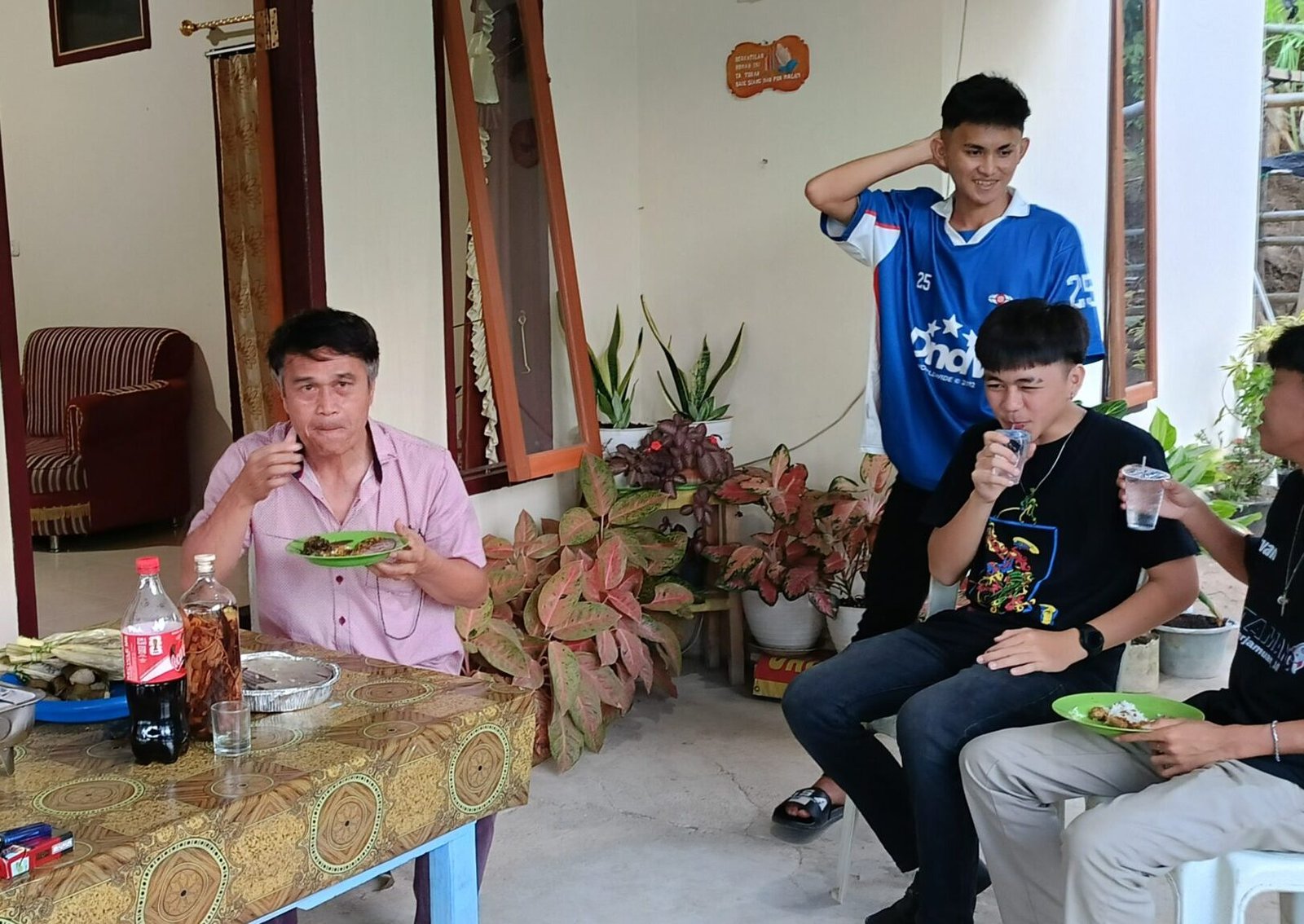
Students Become Guides
There was something beautiful about Fabian waiting for us with his motorcycle.
The teacher had travelled from Tomohon.
But once we arrived in his village, the student became the guide.
He knew the roads.
He knew his neighbourhood.
He knew where his family lived.
For a moment, the usual roles were reversed.
And perhaps that is one of the best things education can produce:
students who know their own place well enough to guide others through it.
When a Teacher Returns to the Village
The students normally travel to Tomohon to learn.
This time, I travelled to their villages to learn from them.
They showed me:
their families,
their houses,
their churches,
their roads,
their landscapes,
their food,
and their stories.
The classroom had moved.
It had become Minahasa itself.
The Meaning of Pengucapan Syukur
After three journeys, I am beginning to see Pengucapan Syukur differently.
It is certainly thanksgiving.
But it is also:
hospitality.
reunion.
memory.
food.
faith.
community.
generosity.
belonging.
The open house becomes a bridge.
The table becomes a meeting place.
And the food becomes a language that everyone understands.
DID YOU KNOW?
Tomohon Is a City of Students
Young people from many villages across Minahasa come to Tomohon for education.
This creates a strong connection between Tomohon and the surrounding villages.
During Pengucapan Syukur, teachers and school communities can travel in the opposite direction—to the villages where their students come from.
DID YOU KNOW?
The Journey Along Lake Tondano Can Become a Cultural Route
The road from the Tondano area toward Maumbi passes through villages including Kombi, Ranowangko, Lalumpe, Tulap and Seretan.
The journey reveals rural landscapes, traditional houses, coconut and clove plantations and village communities.
The road itself can therefore become part of a meaningful travel experience.
DID YOU KNOW?
A Church Can Become Part of the Harvest Story
At both Pangu on the earlier journey and Tondano on this journey, fruits such as bananas and coconuts appeared in church decoration during the thanksgiving season.
The agricultural harvest becomes part of the visual expression of gratitude.
DID YOU KNOW?
Nasi Jaha Becomes a Symbol of Hospitality
During this third journey, nasi jaha followed us from several homes.
It was eaten at the table and given to us to take home.
The repeated presence of nasi jaha across different villages demonstrates how food can become a common thread connecting families and communities during Pengucapan Syukur.
DID YOU KNOW?
A Student’s Home Can Tell a Different Story
In school, a student may be known through assignments, uniforms, grades and classroom activities.
At home, you discover another dimension:
parents, grandparents, siblings, village, church, food and family history.
Visiting students’ homes changes the way a teacher understands the student.
WHAT I BROUGHT HOME
From Lolah:
nasi jaha, dodol and hospitality.
From Ranotongkor:
food, hospitality and an unexpected connection to my own neighbourhood.
From Kolongan:
coffee, nasi jaha, dodol and memories of students leaving for their futures.
From Maumbi:
nasi jaha, dodol and cucur.
From Kiawa:
the memory of hot tea, brenebon, grilled chicken and a student’s story.
And from every village:
another reason to be grateful.
THREE SUNDAYS, THREE LESSONS
The first journey taught me about unexpected encounters.
The second taught me about family responsibility and the generosity of remote villages.
The third taught me about the relationship between teacher, student, family and place.
Three Sundays.
Three journeys.
One season of thanksgiving.
THE ROAD HOME TO TOMOHON
When we finally returned home, the car was full of food.
But my heart was full of something else.
I was thinking about:
Fabian’s parents waiting for us.
Anjelo’s family preparing hot tea late at night.
Mclarent and Stive joining us for coffee.
Syalomita’s mother’s words from years ago.
Marvel’s mother sending her son to her old school.
Ezra’s unexpected family connection.
Prayer’s family welcoming us.
And all the families who opened their doors.
MANY HANDS, MANY HOUSES, ONE THANKSGIVING
Perhaps this is what the Pengucapan Syukur season is teaching me.
It is not only about the food.
It is about who prepares it.
It is not only about the house.
It is about who opens its door.
It is not only about the village.
It is about who welcomes the visitor.
And it is not only about the journey.
It is about the people who make the journey meaningful.
THE RHYTHM OF THE YEAR
Pengucapan Syukur continues to reveal itself one Sunday at a time.
One village at a time.
One table at a time.
One student at a time.
One family at a time.
And perhaps that is the real rhythm of the season:
giving thanks by sharing.
ONE DAY. SIX VILLAGES. MANY TABLES.
Lolah
Former students and open doors.
Ranotongkor
A friend and an unexpected neighbour.
Tondano
A church, harvest decoration and a long-awaited reunion.
Kolongan
Students, former students, coffee, mountains, cloves and coconut trees.
Maumbi
A student waiting with his motorcycle and a family waiting at the table.
Kiawa
A pastor’s family, hot tea and a student’s story.
A TEACHER'S PENGUCAPAN SYUKUR
When the classroom becomes the road
On 26 July 2026, I travelled through Minahasa not as a tourist following an itinerary, but as a teacher visiting the people and places behind my students.
The journey changed direction several times.
But every change brought another encounter.
And at the end of the day, I realized that perhaps the most valuable thing I carried home was not the nasi jaha or dodol filling the car.
It was the deeper understanding that every student carries a village within them.
To know the student better, sometimes we have to travel to that village.
JOURNAL NOTE
The Rhythm of the Year · Pengucapan Syukur
Three Pengucapan Syukur journeys have now taken me through different parts of Minahasa.
Each journey has shown me something new.
But this third journey was particularly meaningful because so much of it was connected to my work as a teacher.
Mclarent. Fabian. Anjelo.
Current Tourism Business students.
Syalomita. Meyfiani. Prayer.
Former students from different chapters of my teaching journey.
And then the families.
Their parents.
Their grandparents.
Their villages.
Their tables.
Their stories.
The distance between Tomohon and the villages of Minahasa suddenly felt much smaller.
Because education creates roads that maps cannot draw.
FROM TOMOHON TO MINAHASA
The journey continues.
Many villages.
Many families.
Many students.
Many tables.
Many stories.
One season of gratitude.
ARTICLE INFORMATION
Volume: VII — The Rhythm of the Year
Section: Annual Celebrations
Category: Pengucapan Syukur
Title: Three Sundays, Many Villages: A Thanksgiving Journey Through Minahasa
Date: 25 August 2026
Region: Minahasa Regency, North Sulawesi
Starting Point: Tomohon
Villages / Places: Pangu · Lolah · Ranotongkor · Tondano · Kolongan · Maumbi · Kiawa
Main Themes: Pengucapan Syukur · Teacher & Student Relationships · Village Hospitality · Family · Foodways · Slow Travel · Living Culture
Current Tourism Students: Mclarent · Fabian · Anjelo
Former Students: Syalomita · Prayer
Food: Nasi Jaha · Dodol · Cucur · Sup Brenebon · Grilled Chicken · Kepiting Santan · Coffee
Landscape: Lake Tondano · Coconut Plantations · Clove Plantations · Traditional Wooden Houses · Rural Villages
Travel Style: Slow Journey · Educational Encounter · Community Visit · Gastronomic Journey
“Sometimes the destination is not the house you were looking for.
Sometimes it is the door that opens for you.”
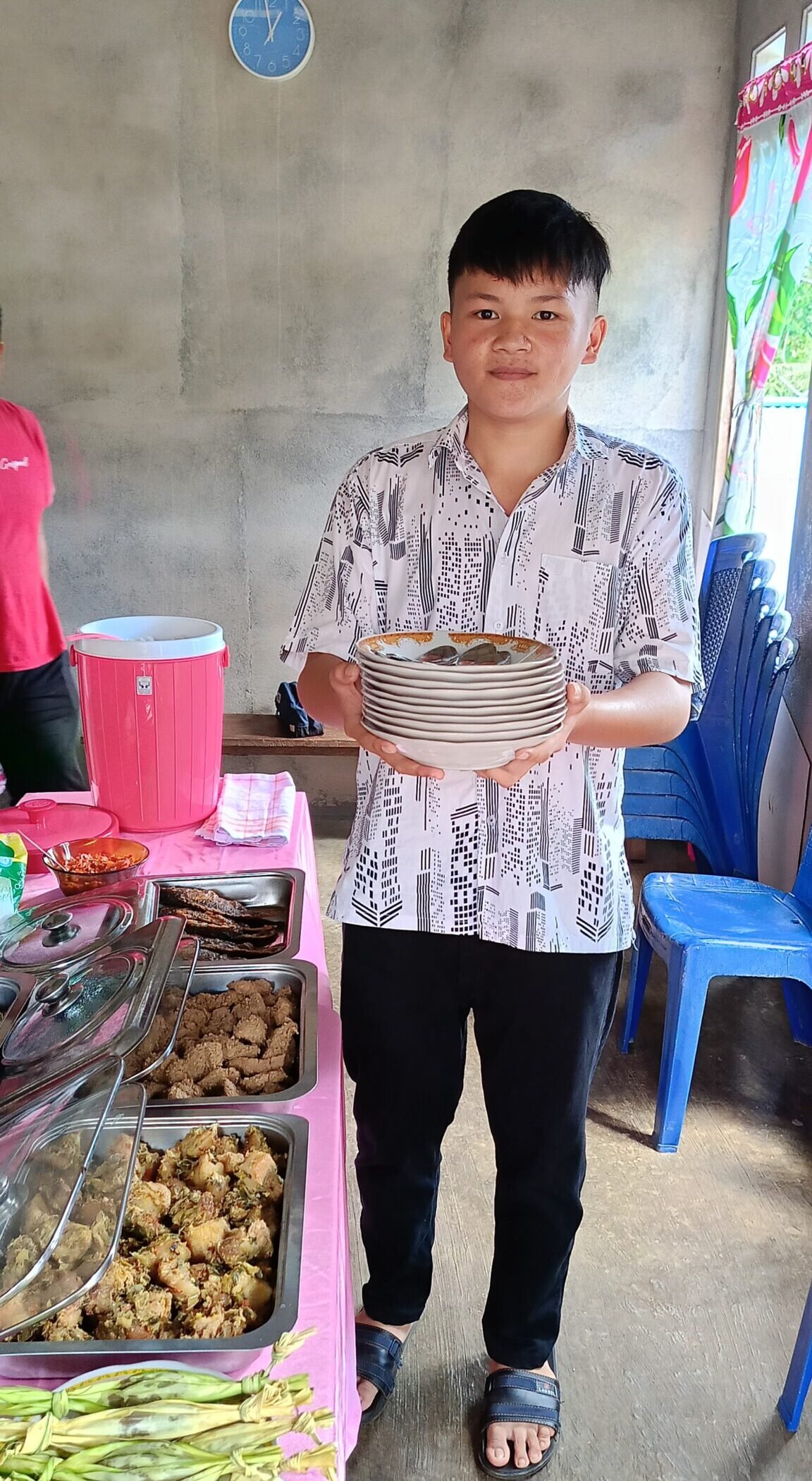
THREE SUNDAYS, MANY VILLAGES
A Thanksgiving Journey Through Minahasa
26 July 2026 · Minahasa Selatan
From Lolah to Ranotongkor, Tondano, Kolongan, Maumbi and Kiawa—following the homes, tables and stories of students, former students, friends and families.