
The First Mapalus Table: Many Hands, One Table
15 August 2026 · Talaga Tomohon Homestay · Tomohon, North Sulawesi
A new gastronomic tradition begins in Tomohon
There Are Dinners, and Then There Are Tables That Begin Something
There are dinners that satisfy hunger.
There are dinners that introduce us to a place.
And then there are dinners that become the beginning of something.
On Saturday, 15 August 2026, at Talaga Tomohon Homestay, the first Mapalus Table was set.
It was an evening of prayer, food, stories, hospitality, and encounter—a gathering that brought members of Komunitas Perintis Pariwisata Gastronomi Tomohon (KOMPPARGASTOM) together with travelers from different parts of the world.
It was also the evening when a new idea took its first step:
Many Hands, One Table.
Category: The Rhythm of the Year
Experience: Mapalus Table
Organized by: Komunitas Perintis Pariwisata Gastronomi Tomohon (KOMPPARGASTOM)
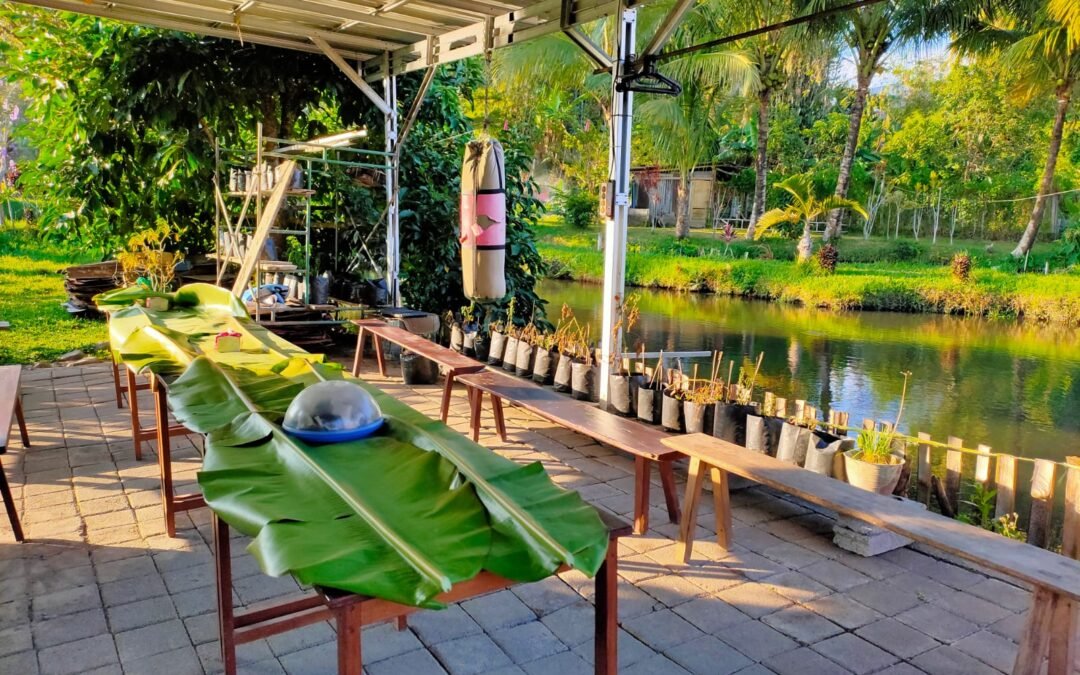
A Table Beside the Springs
The setting mattered.
Talaga Tomohon Homestay is situated beside natural springs, with fish ponds forming part of the landscape and a beautiful view toward Mount Lokon.
Water, gardens, fish ponds, mountains, and food came together in one place.
It was an appropriate setting for a gathering whose philosophy is rooted in the relationship between people, food, and place.
The guests did not arrive at an anonymous restaurant.
They arrived somewhere with a landscape.
Somewhere with water.
Somewhere with a mountain.
Somewhere where the evening meal could be understood as part of a living place.
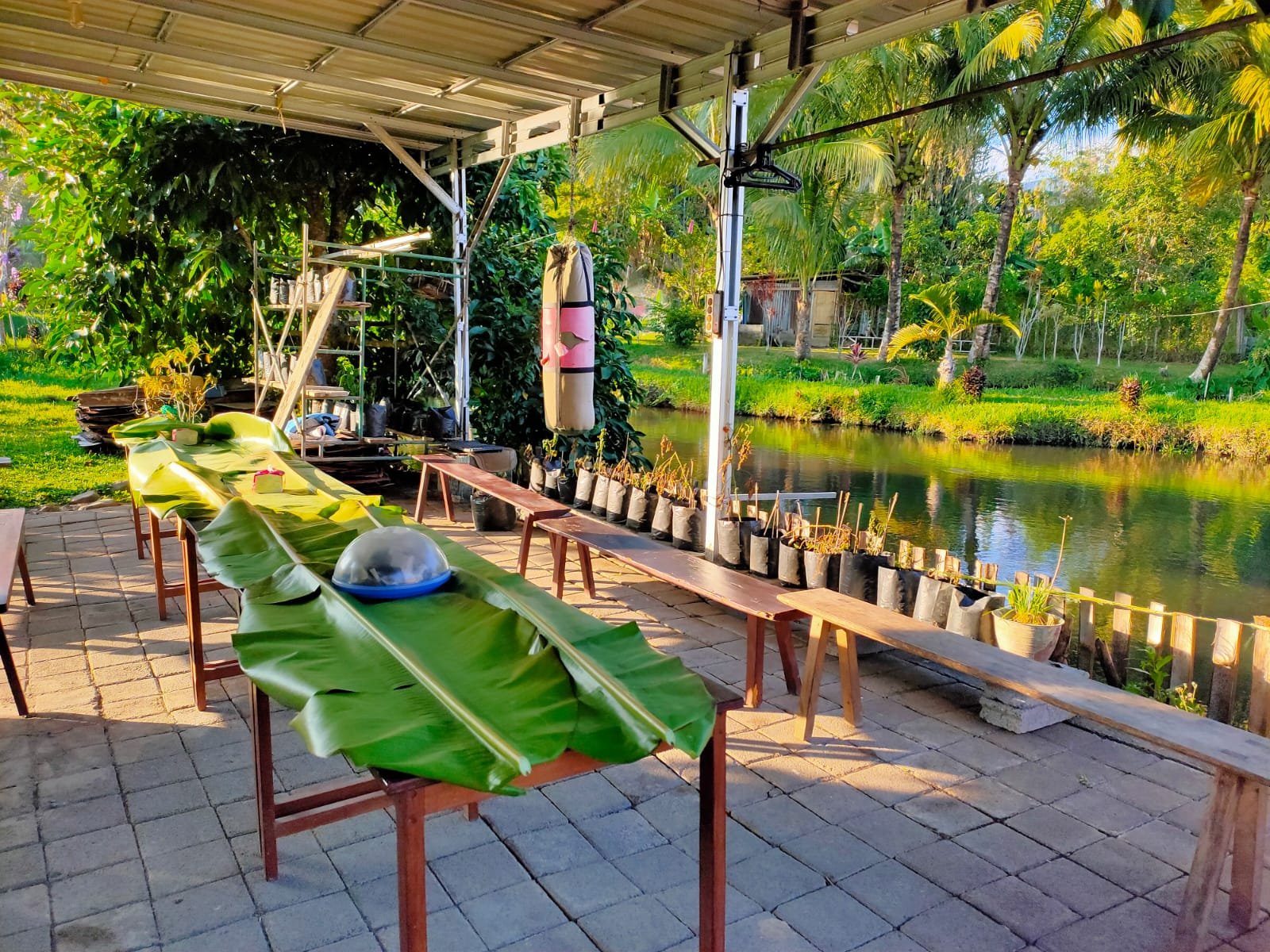
As afternoon moved toward evening, the table began to take shape.
And one of the first things to catch the eye was not a plate.
It was the table itself.
A Table Covered by Daon Laikit
The table was covered with Daon Laikit, a large local leaf traditionally used as a natural covering and serving element.
Its broad green surface transformed an ordinary table into something connected to the landscape.
It immediately expressed an important principle of the Mapalus Table:
The table itself should tell a story.
The food would come from the land.
The table covering came from nature.
The cooks and hosts brought knowledge.
The travelers brought curiosity.
And the evening brought everyone together.
Before the Food, There Was Gratitude
The first Mapalus Table was not simply launched as a culinary event.
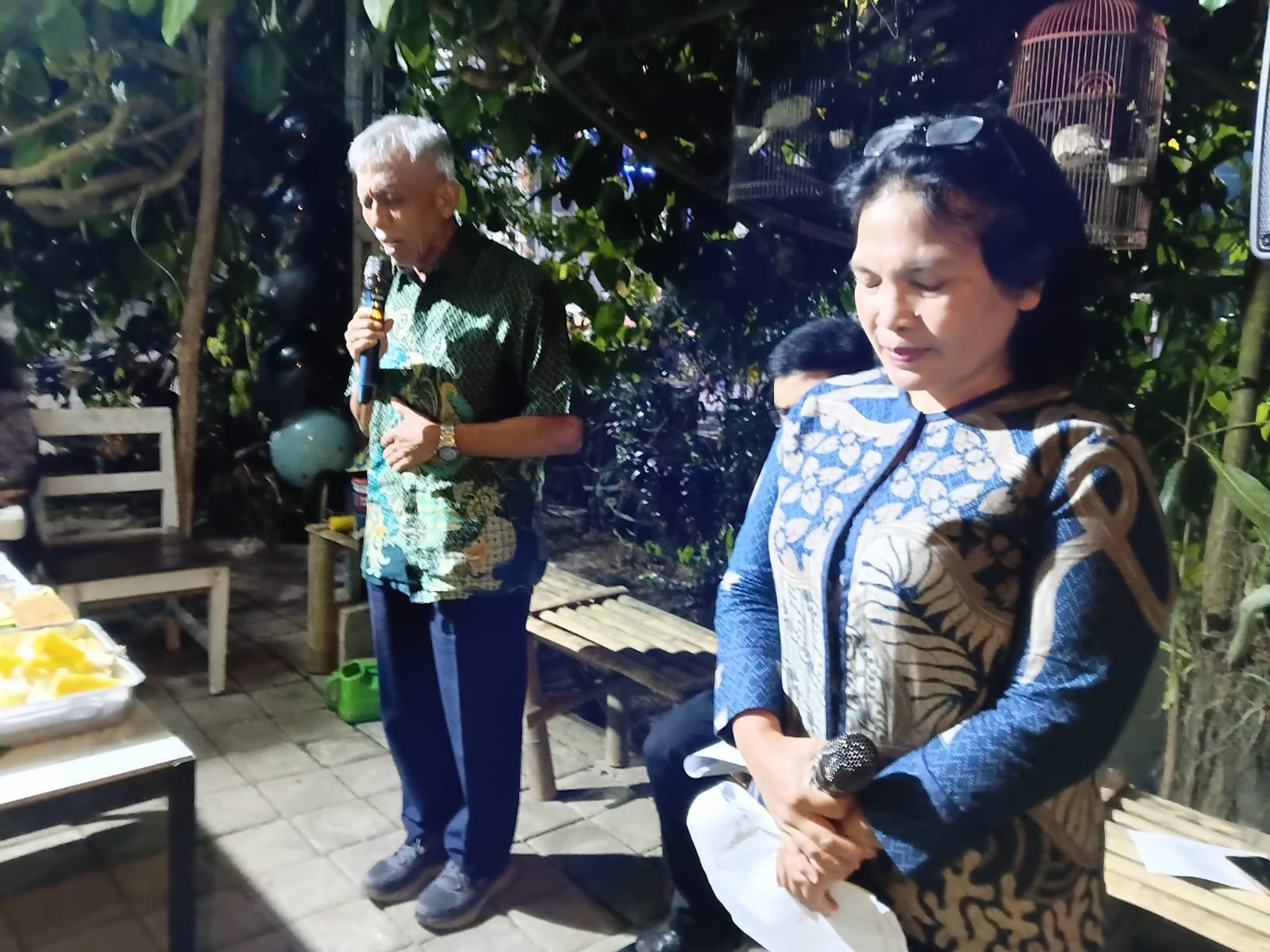
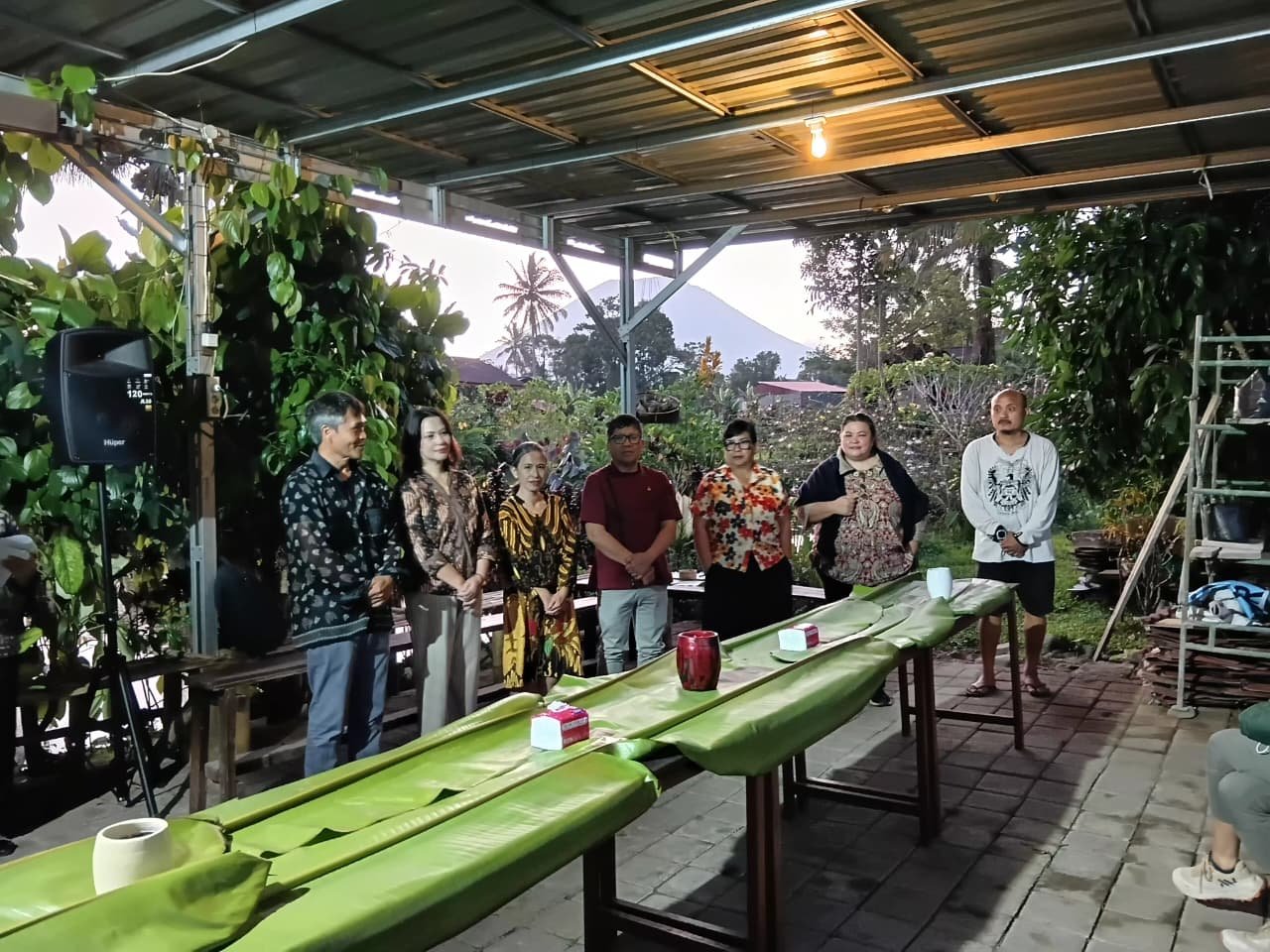
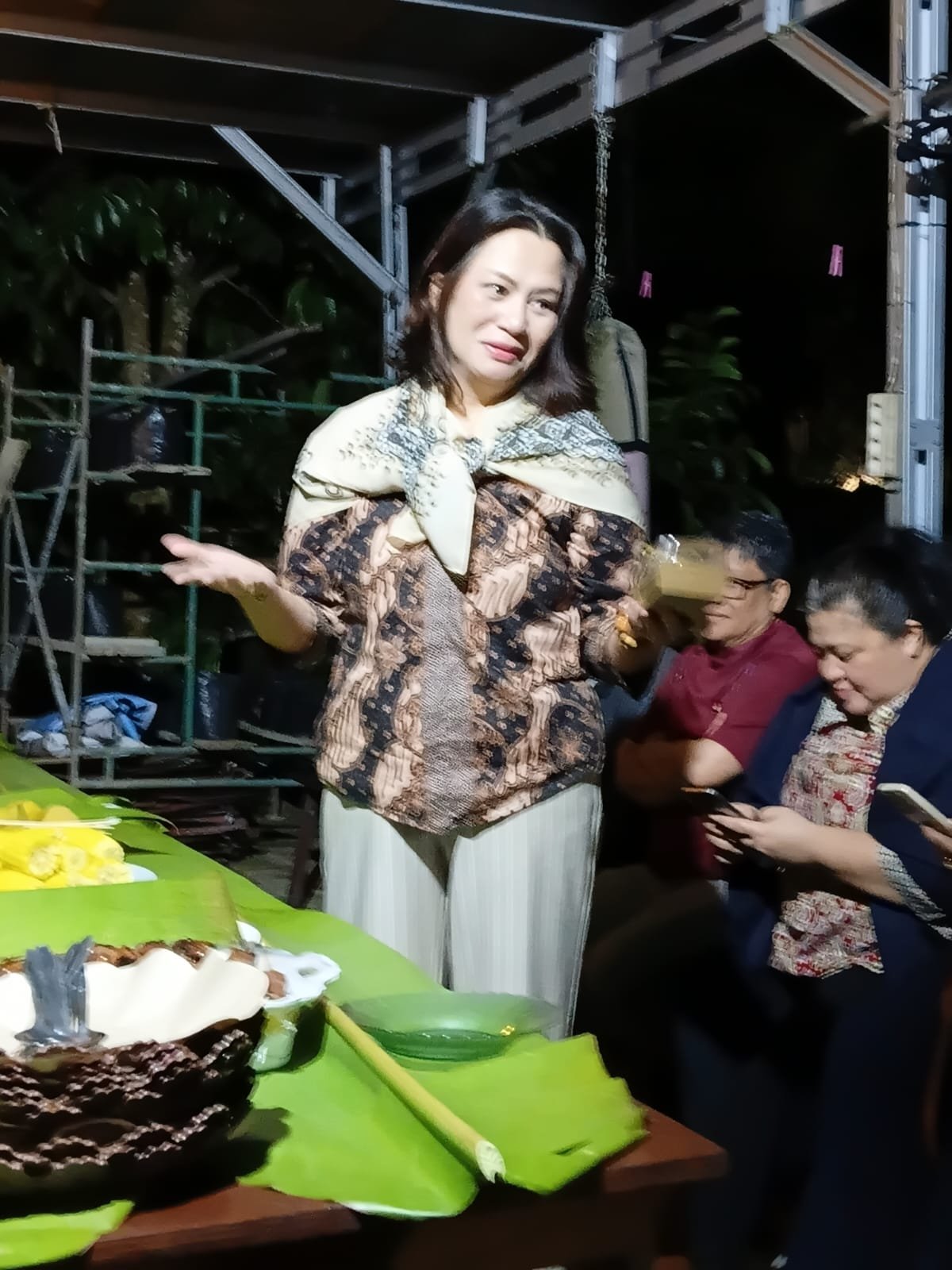
It began with a dedication ceremony for KOMPPARGASTOM.
The gathering opened with prayer, Scripture reading, and preaching led by Pastor Boas M. Putro.
The moment established the spirit of the evening.
Before sharing food, the community paused to give thanks.
Before welcoming travelers to the table, the community dedicated its work.
And before celebrating gastronomy, there was recognition that food, community, nature, and life itself are gifts deserving gratitude.
The dedication also formally acknowledged the board of Komunitas Perintis Pariwisata Gastronomi Tomohon, led by Alexander J. Maerah, and its commitment to developing gastronomic tourism rooted in Tomohon and Minahasa.
The emphasis, however, was not on one individual.
It was on a community.
Because Mapalus has never been about one pair of hands.
It is about many hands working together.
The Mapalus Table Ritual
After the dedication, the evening moved toward the table.
This was not simply the moment when dinner was served.
It was the beginning of the Mapalus Table ritual.
Food was brought together.
People gathered around the same table.
The meaning was simple:
Everyone contributes. Everyone shares. Everyone belongs.
The table became a physical expression of Mapalus.
A farmer’s contribution.
A cook’s knowledge.
A host’s hospitality.
A traveler’s curiosity.
A storyteller’s memory.
A community’s heritage.
All meeting in one place.
A Table Full of Tomohon and Minahasa
And then came the food.
Not one dish.
Not one story.
But many.
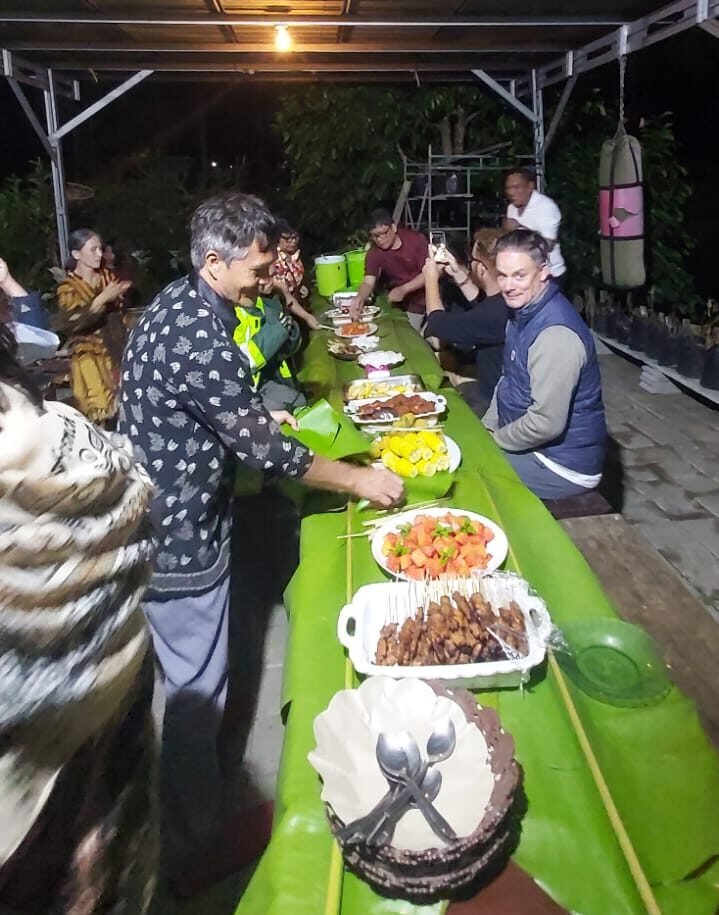
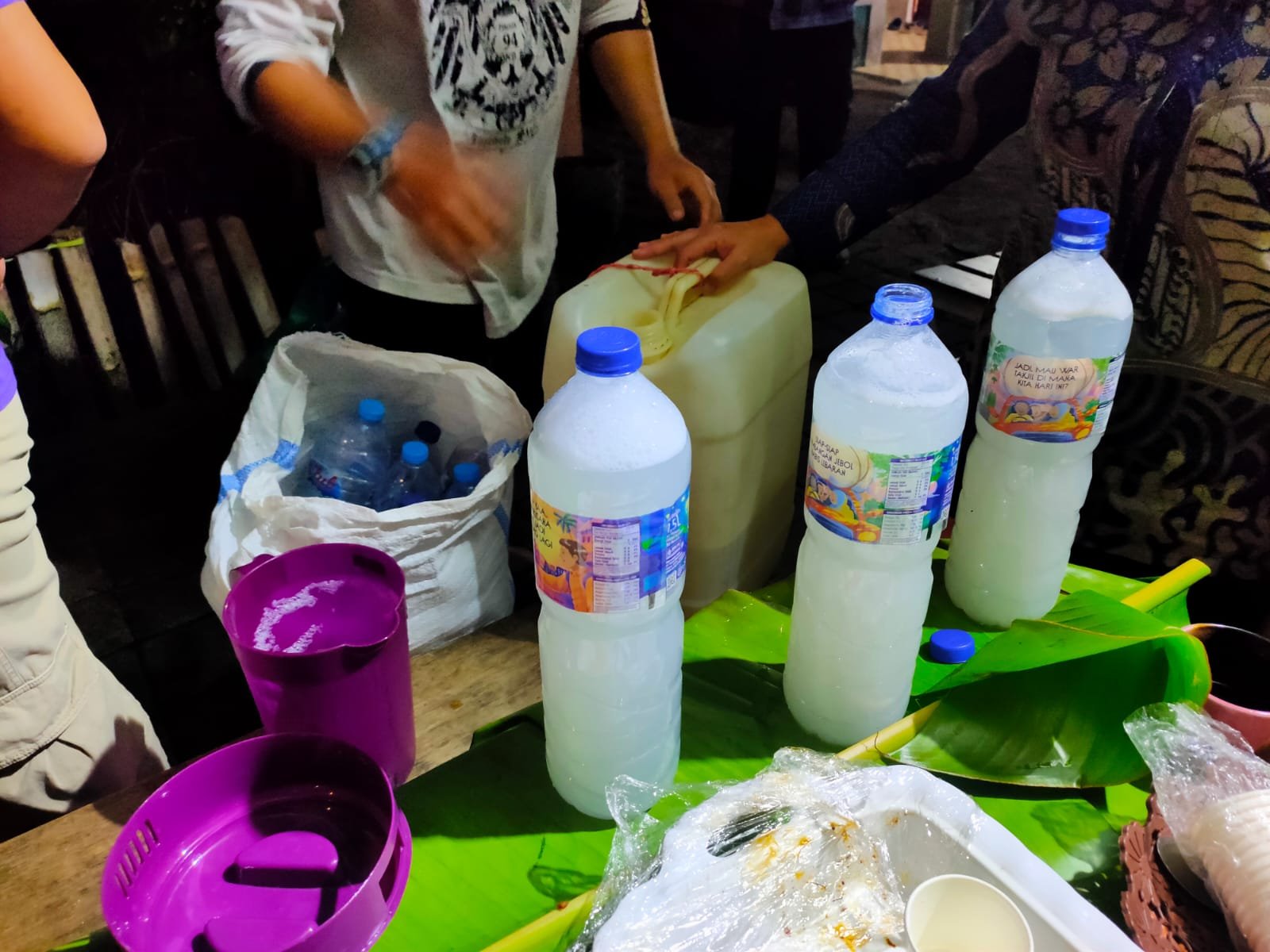
The first Mapalus Table presented a generous collection of foods and drinks representing different dimensions of local culinary life.
There was Sup Brenebon, the comforting red-bean soup familiar across Indonesian and Minahasan tables.
There was Ayam Bumbu RW, rich and intensely flavored.
There was Ayam Saus Rica-Rica, carrying the characteristic heat and aromatic character of North Sulawesi.
There was sate babi.
And, simply but importantly, there was nasi—the staple around which so many Indonesian meals become complete.
The table also included ubi, both fried and boiled.
These humble tubers reminded everyone that gastronomic heritage does not always live in elaborate dishes.
Sometimes it is found in something as simple as a boiled sweet potato.
Freshness, Heat and Sweetness
A papaya salad brought another dimension to the table.
Fresh papaya was combined with mint and lemon cui, the small citrus fruit known elsewhere as calamansi.
Freshness met acidity.
Herbs met fruit.
The dish provided a lighter counterpoint to the richer foods.
And then came the sweets.
There was klappertaart, one of the distinctive sweet expressions associated with North Sulawesi.
There was nougat cake.
And there were kukis putar, a simple twisted fried pastry with sugar—a small sweet that carried the charm of homemade food.
There were also familiar snacks such as fried and boiled sweet potatoes.
Together they created something more interesting than a menu.
They created a food landscape.
Saguer, Coffee and Conversation
Drinks had their own stories.
Saguer, the traditional palm-sap beverage, brought another connection to local foodways.
Later, coffee became part of the slower rhythm of the evening.
This was important.
A Mapalus Table should not be rushed.
Coffee invites conversation.
Conversation creates stories.
Stories create encounters.
And encounters are often what travelers remember long after they have forgotten the exact name of a dish.
Six Travelers Around the Table
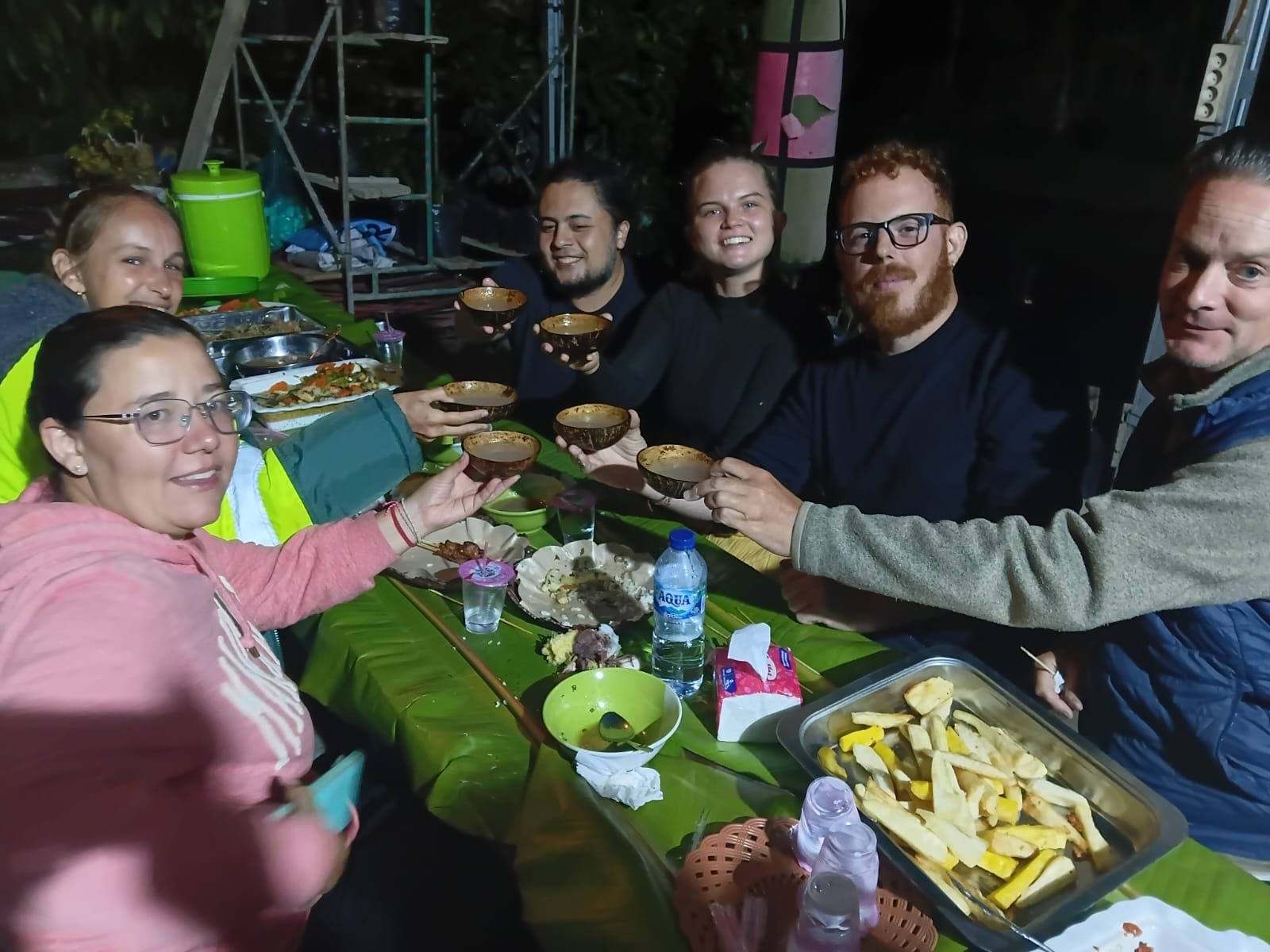
Approximately six travelers participated in the first Mapalus Table.
They came from different countries and cultural backgrounds:
Germany · France · Brazil · Spain · Catalunya
They arrived with different expectations and different food memories.
But they shared one table.
And their reactions after the evening were perhaps the most encouraging part of the experience.
“Maybe It Could Be a Weekly Institution”
Laurin from Germany saw the potential immediately:
“I think Mapalus Table is a very nice idea. Maybe it could be a weekly institution. Every time highlights a different aspect of the local cuisine.”
It is difficult to imagine a better suggestion for the future.
A weekly Mapalus Table would not need to repeat the same meal.
Each table could tell another story.
One week might be about vegetables.
Another about coffee.
Another about harvest.
Another about Minahasan celebration food.
Another about traditional drinks.
Another about a particular family or village foodway.
The table could change with the seasons.
Conversation creates stories.
Stories create encounters.
And encounters are often what travelers remember long after they have forgotten the exact name of a dish.
“We Made Some Great Local Discoveries”
Sara from France wrote:
“Terima kasih for the wonderful shared experience! The food was delicious! We made some great local discoveries! The people were very welcoming! And we met some wonderful people!”
The comment captures the essence of the concept.
The travelers discovered food.
But they also discovered people.
That distinction is important.
“A New Tradition”
Arthur from Brazil wrote:
“The food and people were great! It would be wonderful if this experience turned into a new tradition. I hope I can join again!”
A tradition does not begin because someone declares it to be one.
It begins because people want to repeat it.
Perhaps the first Mapalus Table was the first step.
“We Made Some Great Local Discoveries”
Sara from France wrote:
“Terima kasih for the wonderful shared experience! The food was delicious! We made some great local discoveries! The people were very welcoming! And we met some wonderful people!”
The comment captures the essence of the concept.
The travelers discovered food.
But they also discovered people.
That distinction is important.
“Teach Minahasa Words, Share Stories”
Sara from France wrote:
“Terima kasih for the wonderful shared experience! The food was delicious! We made some great local discoveries! The people were very welcoming! And we met some wonderful people!”
The comment captures the essence of the concept.
The travelers discovered food.
But they also discovered people.
That distinction is important.
“The Best Surprise of the Day”
For Mima from Catalunya, the evening was unexpected:
“This wonderful local dinner was the best surprise of the day! Lovely people with a very nice project that invited us to the table.”
She particularly remembered the food, describing it as:
“One of the best meals I had in Indonesia.”
For a first Mapalus Table, these words are deeply encouraging.
But perhaps the most important phrase is earlier in her comment:
“invited us to the table.”
That is precisely what the Mapalus Table seeks to do.
Not simply serve visitors.
Invite them in.
When Food Becomes an Encounter
The first Mapalus Table reminded us that gastronomy is not only about taste.
It is about context.
Brenebon has a cultural context.
Rica-rica has a culinary identity.
Saguer has a story.
Klappertaart carries layers of history and cultural influence.
Ubi connects the table with agriculture and everyday food.
Coffee slows the conversation.
And Daon Laikit connects the table itself with nature.
Together, these things create something larger than a meal.
They create an encounter with place.
The Mountain at the Table
Beyond the food and conversation, Mount Lokon remained part of the evening.
It did not need to be explained.
It was simply there.
A reminder that Tomohon is a highland city shaped by volcanic landscapes, fertile soils, gardens, and agriculture.
The mountain, the springs, and the fish ponds at Talaga Tomohon Homestay provided the physical setting.
The food provided the taste.
The people provided the stories.
And the table brought everything together.
From the First Table to the Next
The first Mapalus Table was intentionally small.
That may have been its strength.
It allowed people to talk.
To listen.
To ask questions.
To share food.
To meet one another.
It was intimate enough for cultures to mix naturally.
The challenge now is not simply to make the next Mapalus Table bigger.
It is to make it deeper.
Perhaps the next table introduces a few Minahasa words.
Perhaps one farmer tells the story of an ingredient.
Perhaps a cook shares a family recipe.
Perhaps travelers bring something from their own food culture.
Perhaps every gathering explores another aspect of Tomohon and Minahasa gastronomy.
The possibilities are many.
A New Rhythm for Tomohon?
The first Mapalus Table was intentionally small.
That may have been its strength.
It allowed people to talk.
To listen.
To ask questions.
To share food.
To meet one another.
It was intimate enough for cultures to mix naturally.
The challenge now is not simply to make the next Mapalus Table bigger.
It is to make it deeper.
Perhaps the next table introduces a few Minahasa words.
Perhaps one farmer tells the story of an ingredient.
Perhaps a cook shares a family recipe.
Perhaps travelers bring something from their own food culture.
Perhaps every gathering explores another aspect of Tomohon and Minahasa gastronomy.
The possibilities are many.
Did You Know?
Daon Laikit
The first Mapalus Table was covered with Daon Laikit, a large local leaf used as a natural table covering.
Its presence added a simple but powerful connection between the meal and the landscape.
Instead of bringing the landscape onto the table through decoration, the table itself became part of the landscape.
Did You Know?
Talaga Tomohon
Talaga Tomohon Homestay is situated around natural springs and fish ponds, with views toward Mount Lokon.
This combination of water, landscape, agriculture, and food makes it a fitting setting for a gastronomic experience based on place and community.
What Travelers Said
“Maybe it could be a weekly institution. Every time highlights a different aspect of the local cuisine.”
— Laurin, Germany
“We made some great local discoveries! The people were very welcoming! And we met some wonderful people!”
— Sara, France
“It would be wonderful if this experience turned into a new tradition. I hope I can join again!”
— Arthur, Brazil
“I would foster eating all together so cultures can mix better, teach Minahasa words, share stories. Keep pushing for many hands, one table.”
— Aline & Naki, Spain
“This wonderful local dinner was the best surprise of the day… One of the best meals I had in Indonesia.”
— Mima, Catalunya
A Note From SULAWESIOUS ENCOUNTERS
We believe meaningful travel does not begin with a checklist of attractions.
It begins with an encounter.
Sometimes that encounter happens in a village.
Sometimes in a family kitchen.
Sometimes on a farm.
And sometimes around a table.
The first Mapalus Table reminded us that when people bring what they have and share it with others, a meal can become something much greater.
It can become community.
It can become memory.
It can become the beginning of a tradition.
Slow Down. Taste and See Our World.
Article Information
Title: The First Mapalus Table: Many Hands, One Table
Volume: Volume VII — The Rhythm of the Year
Section: Annual & Community Celebrations
Event: Mapalus Table
Date: 15 August 2026
Venue: Talaga Tomohon Homestay
Location: Tomohon, North Sulawesi, Indonesia
Organizer: KOMPPARGASTOM
Theme: Gastronomy · Community · Hospitality · Mapalus · Cultural Encounters
Related Articles
Continue exploring Volume IV – Living Traditions:
- Understanding Mapalus
- The Spirit of Mutual Cooperation
- Maengket: Dance, Song & Community
- Kabasaran: History Through Movement
- Music in Everyday Life
- The Tradition of Open Houses
- Wedding Traditions in Minahasa
- Ritual Foods of Celebration
- Storytelling Across Generations
- Why Traditions Continue to Matter

We made some great local discoveries! The people were very welcoming!
And we met some wonderful people!”
Experience The Mapalus Spirits
The Mapalus Table is not simply an event to observe.
It is an invitation to participate.
Sit at the table.
Meet the people behind the food.
Listen to their stories.
Taste the ingredients.
Discover the traditions.
And experience how a community turns gastronomy into hospitality.