
A Sunday of Open Doors
12 July 2026 · Minahasa Selatan · North Sulawesi, Indonesia
From Tewasen to Karimbouw, Tumpaan and Koreng — a first journey into the Pengucapan Syukur season
There Are Sundays When People Simply Go To Church.
And there are Sundays when the whole village seems to open its doors.
In Minahasa, Pengucapan Syukur is one of those Sundays.
On 12 July 2026, I began my first Pengucapan Syukur journey of the 2026 thanksgiving season.
I travelled with friends in a rental car, planning to visit several villages in Minahasa Selatan.
Our original plan was to visit Karimbouw first, because it was the farthest village on our route. From there, we intended to continue to Tewasen, then Tumpaan, and finally Koreng.
But the day had its own rhythm.
It was already approaching lunchtime.
We were hungry.
And the roads were becoming increasingly busy because of Pengucapan Syukur.
So the itinerary changed.
Instead of continuing directly to Karimbouw, I decided that we should stop first in Tewasen.
That unexpected change became the beginning of a Sunday filled with friendship, food, hospitality and encounters.
Section: Annual Celebrations
Category: Volume VII — The Rhythm of the Year
Experience: Pengucapan Syukur · Village Hospitality · Foodways · Friendship · Meaningful Travel
A Sunday When the Villages Open Their Doors
Pengucapan Syukur is much more than a thanksgiving service.
It is religious.
It is cultural.
It is social.
And it is deeply connected to food.
Families prepare their homes.
Relatives return to their villages.
Friends visit friends.
Neighbours welcome neighbours.
Visitors arrive.
And tables are filled with food.
The door is open.
The food is ready.
The guests are welcome.
This is why Pengucapan Syukur belongs naturally to the story of living gastronomy.
The food does not exist separately from the people.
It exists within relationships.
From Tomohon to Minahasa Selatan
Our journey began in Tomohon.
As a city of students, Tomohon has strong connections with villages throughout Minahasa and neighbouring regencies. Many young people leave their villages to study in Tomohon, creating networks of friendships between students, teachers, families and communities.
Pengucapan Syukur provides an opportunity to travel back through those networks.
For me, this journey was particularly personal.
The people we planned to visit were not anonymous hosts.
They were:
friends,
colleagues,
students,
former students,
and their families.
Tewasen: An Unexpected First Stop
Our original plan was different.
We intended to visit Karimbouw first, as it was the farthest village on our route.
After spending time there, we planned to continue to Tewasen, where I hoped to meet my old friend and former colleague Rommie.
Rommie and I had worked together many years ago at a tour operator company in Manado.
I knew that he was expected to be in Tewasen later that day, so I was looking forward to seeing him again.
But by the time we were approaching the area, it was already around lunchtime.
We were hungry.
Rather than continuing farther along the road, I decided to change the plan.
Let’s stop in Tewasen first.
A Family Table in Tewasen
So Tewasen became our first destination.
We visited the Talumepa family, where my friend Yudi lives with his wife, Anne, and their two children.
One of their children, Mikelan, is my baptized son.
That made the visit particularly meaningful.
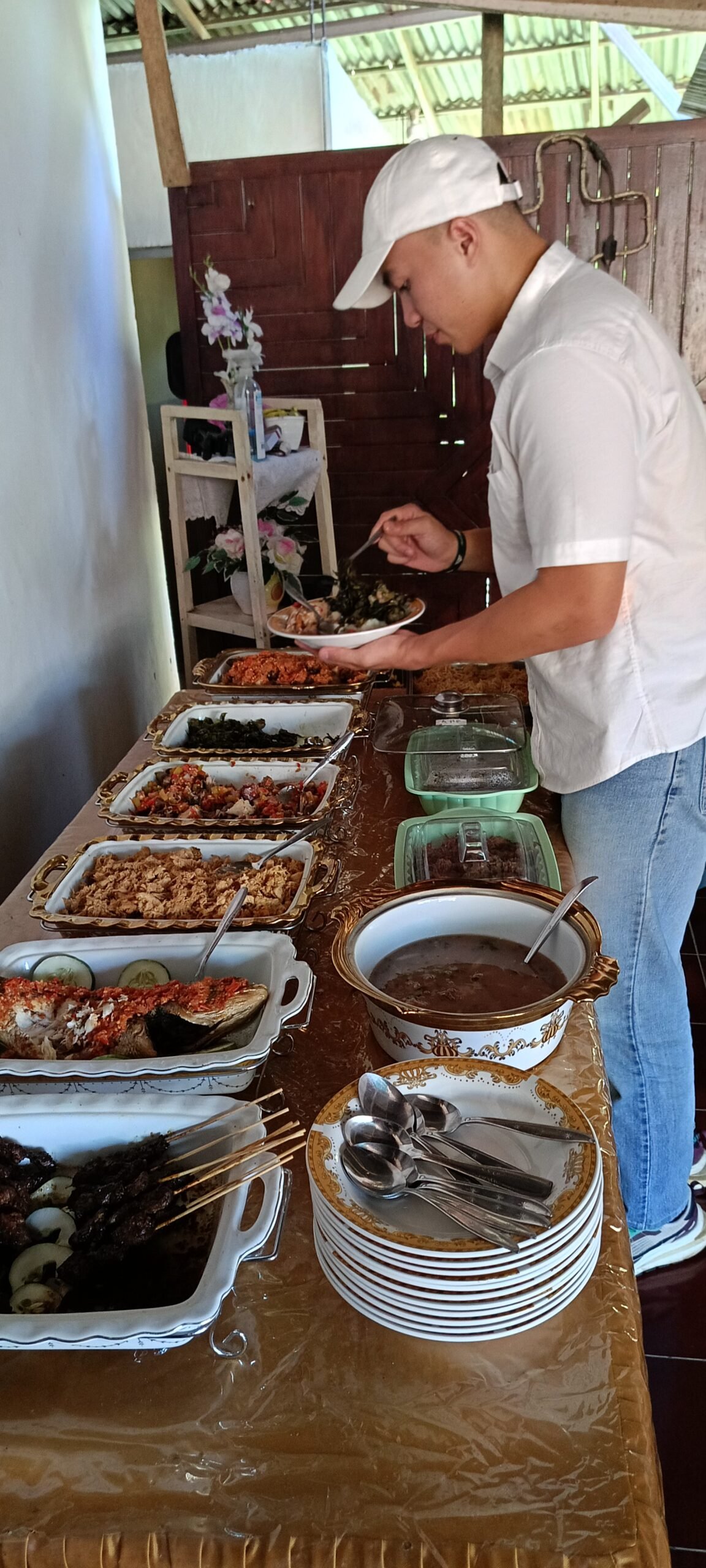
We were warmly welcomed into their home and shared the Pengucapan Syukur atmosphere with the family.
It was a good decision.
We were hungry, and the house offered us not only food, but also the warmth of friendship and family.
At that moment, however, I still expected that we might return to the original sequence later and perhaps meet Rommie after visiting Karimbouw.
But the day had another plan.
“Go to Karimbouw Sooner”
After lunch, Yudi told us something that changed our itinerary again.
If we waited until later to travel toward Karimbouw, the road would probably become very busy.
Pengucapan Syukur meant many people were travelling between villages.
The traffic was already heavy, and later in the afternoon it could become much worse.
So we made another decision:
We should go to Karimbouw sooner.
That meant leaving Tewasen earlier than originally planned.
And consequently, I left Tewasen without meeting Rommie.
It was a small disappointment.
One of the reasons I had originally planned to visit Tewasen later was the hope of seeing an old friend again.
But this is also part of travelling.
Sometimes an itinerary changes because of hunger.
Sometimes because of traffic.
Sometimes because someone gives you local advice.
And sometimes, the person you hoped to meet simply isn’t there when you arrive.
Some Encounters Have to Wait
I did not meet Rommie that day.
But perhaps that makes the story more human.
The journey was not perfectly executed according to a schedule.
It unfolded according to the realities of the day.
We followed our hunger.
We listened to Yudi’s knowledge of the road.
We responded to the traffic.
And we continued.
The missed encounter with Rommie became part of the story itself.
Perhaps another day, another Pengucapan Syukur, or another journey through Tewasen will give us the opportunity to sit together again.
For now, I carry the memory of the visit to his village—and the hope that our paths will meet again.
The Road Through Coconut and Clove Country
After leaving Tewasen, we continued towards Karimbouw.
The villages and countryside around us were surrounded by coconut and clove plantations.
These plantations are more than scenery.
They are part of the agricultural identity of Minahasa Selatan.
They are connected to livelihoods, family histories and local foodways.
The road also revealed something else that caught my attention:
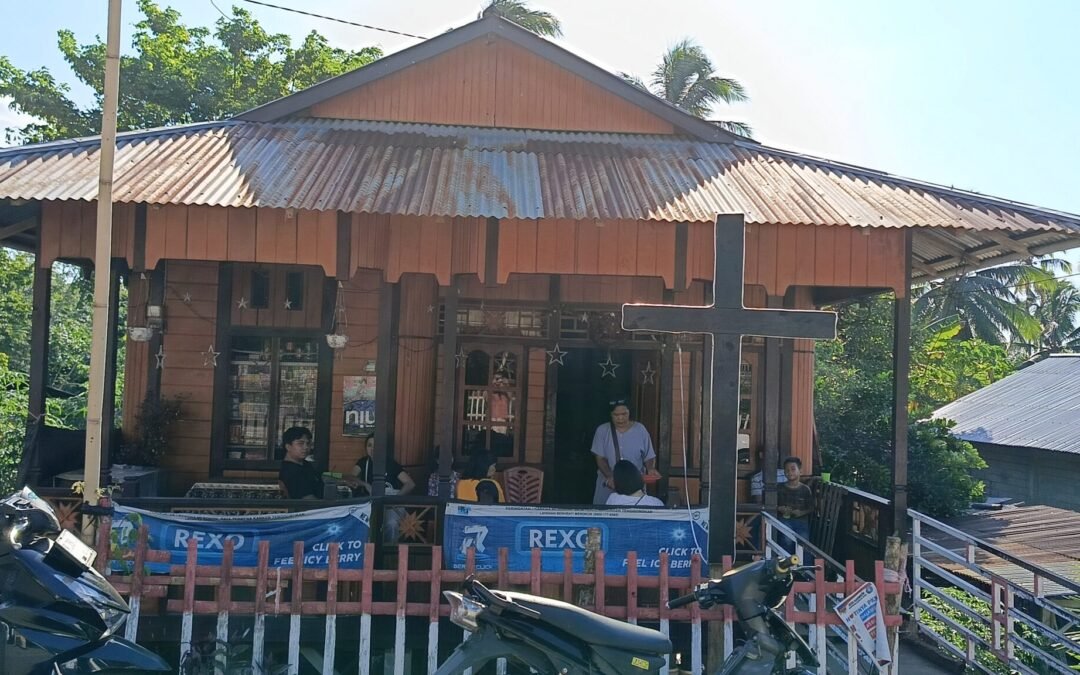
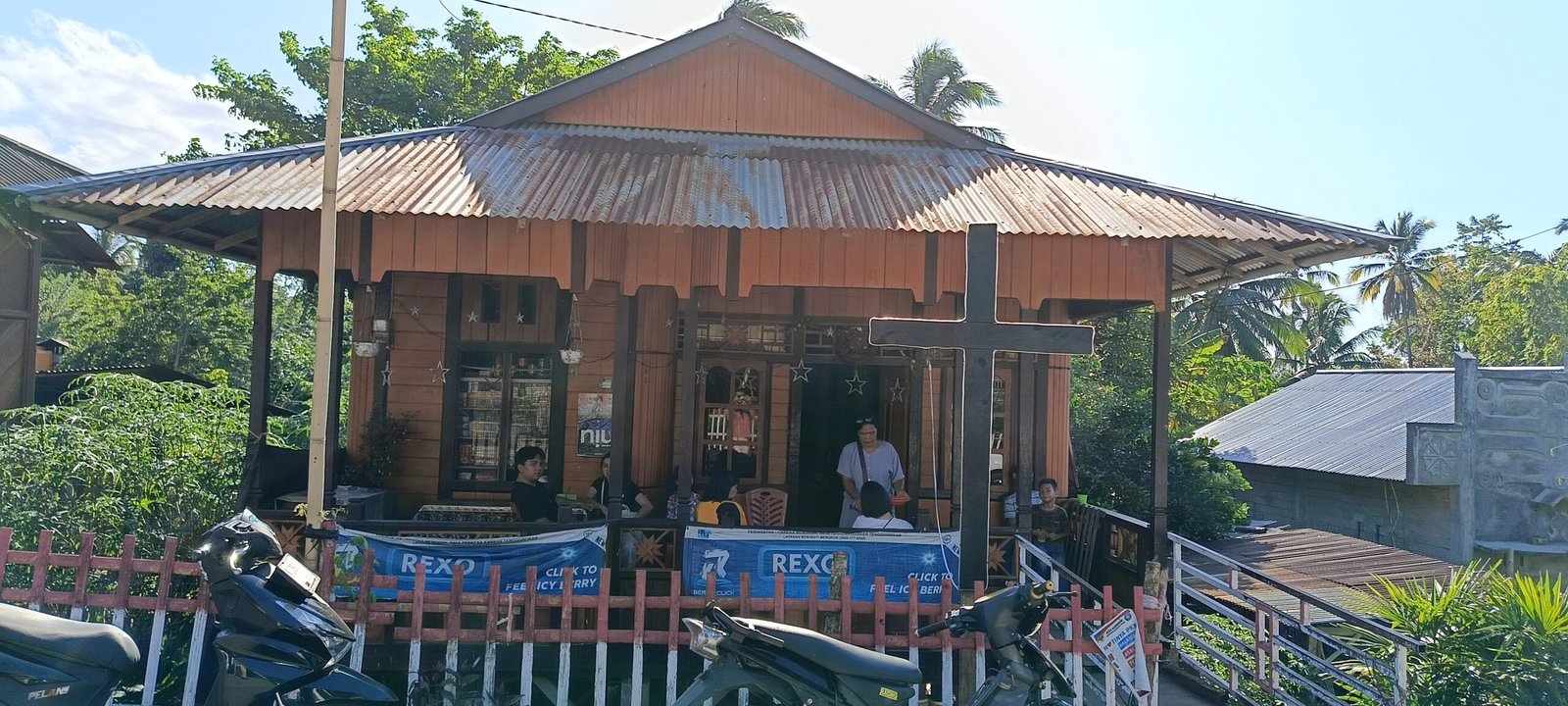
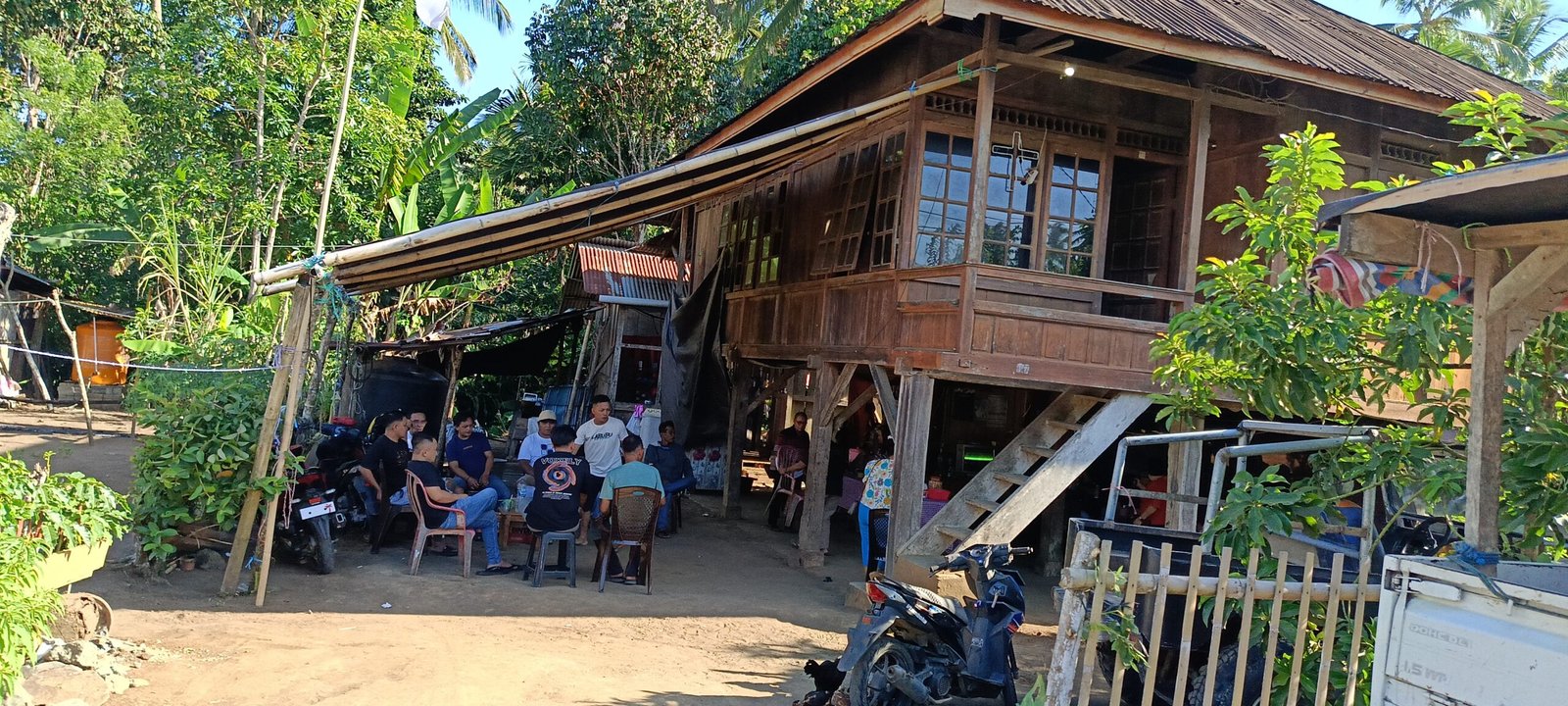
traditional wooden houses.
Some stood beside newer buildings.
Others remained beautifully integrated into village life.
For me, these houses are reminders that a cultural landscape is made not only by mountains and plantations, but also by the homes where generations have lived, cooked, celebrated and welcomed guests.
Karimbouw: The First Nasi Jaha of the Day
In Karimbouw, we visited Jerry from the Runtunuwu family.
Jerry has his own connection with SMKS Kristen 2 Tomohon.
When he was studying at a university in Tondano, he once completed his teaching practice at our school.
So again, the journey was not simply about visiting a village.
It was about following a network of people connected through education, work and friendship.
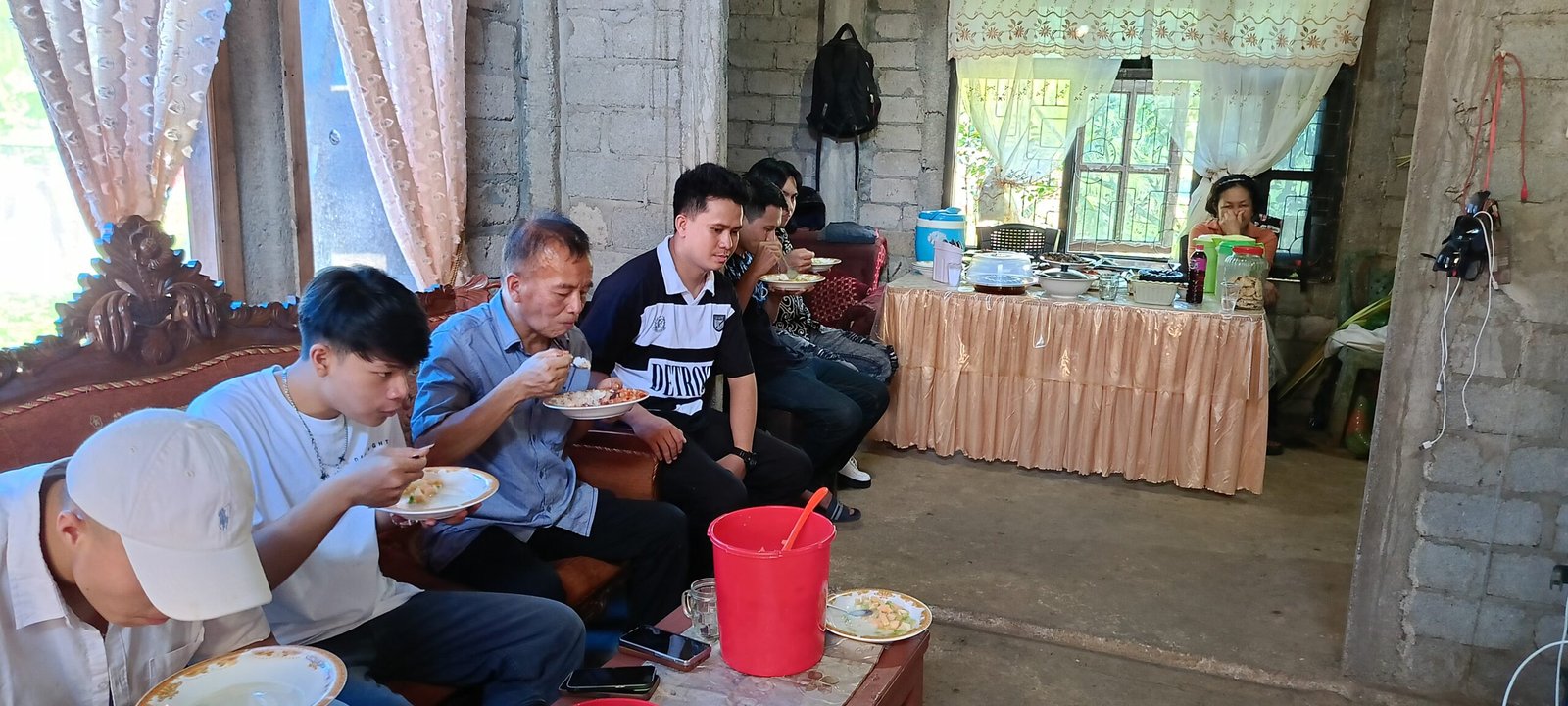
Dodol Made by His Mother
But what I remember most strongly from the Runtunuwu family table is the dodol.
It was homemade.
Jerry’s mother had made it herself.
And the taste was unforgettable.
There is something different about eating food prepared by someone in their own home during a celebration.
The food carries the personality of the household.
The time spent preparing it.
The ingredients.
The patience.
And the generosity of giving it to others.
That dodol was not simply dessert.
It became a memory of Karimbouw.
Nasi Jaha and Dodol
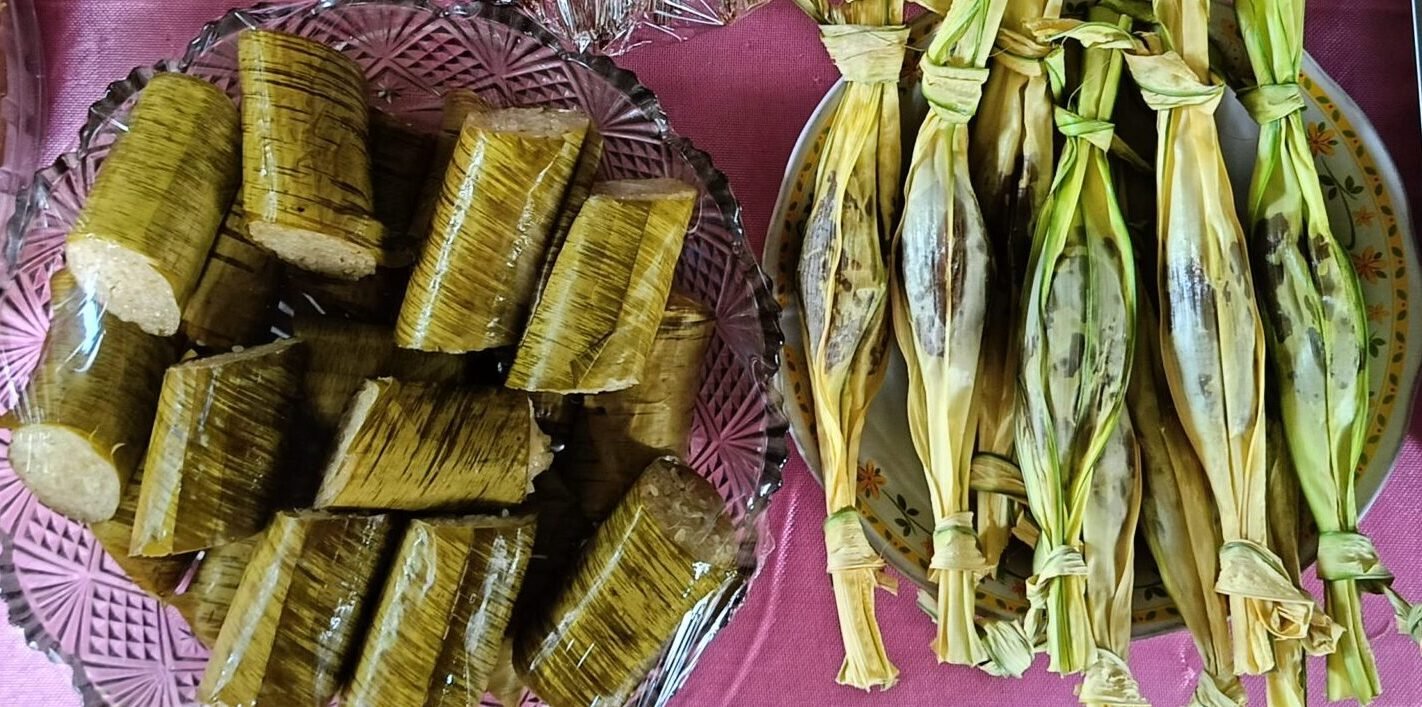
This was also where we had our first nasi jaha and dodol of the day.
We ate at the house.
And, as often happens during Pengucapan Syukur, we were also given food to bring home.
This is one of the most beautiful parts of the celebration.
The hospitality continues after the guest leaves.
A piece of the celebration travels home with you.
Tumpaan: Visiting a Teacher Friend
From Karimbouw, we continued to Tumpaan village.
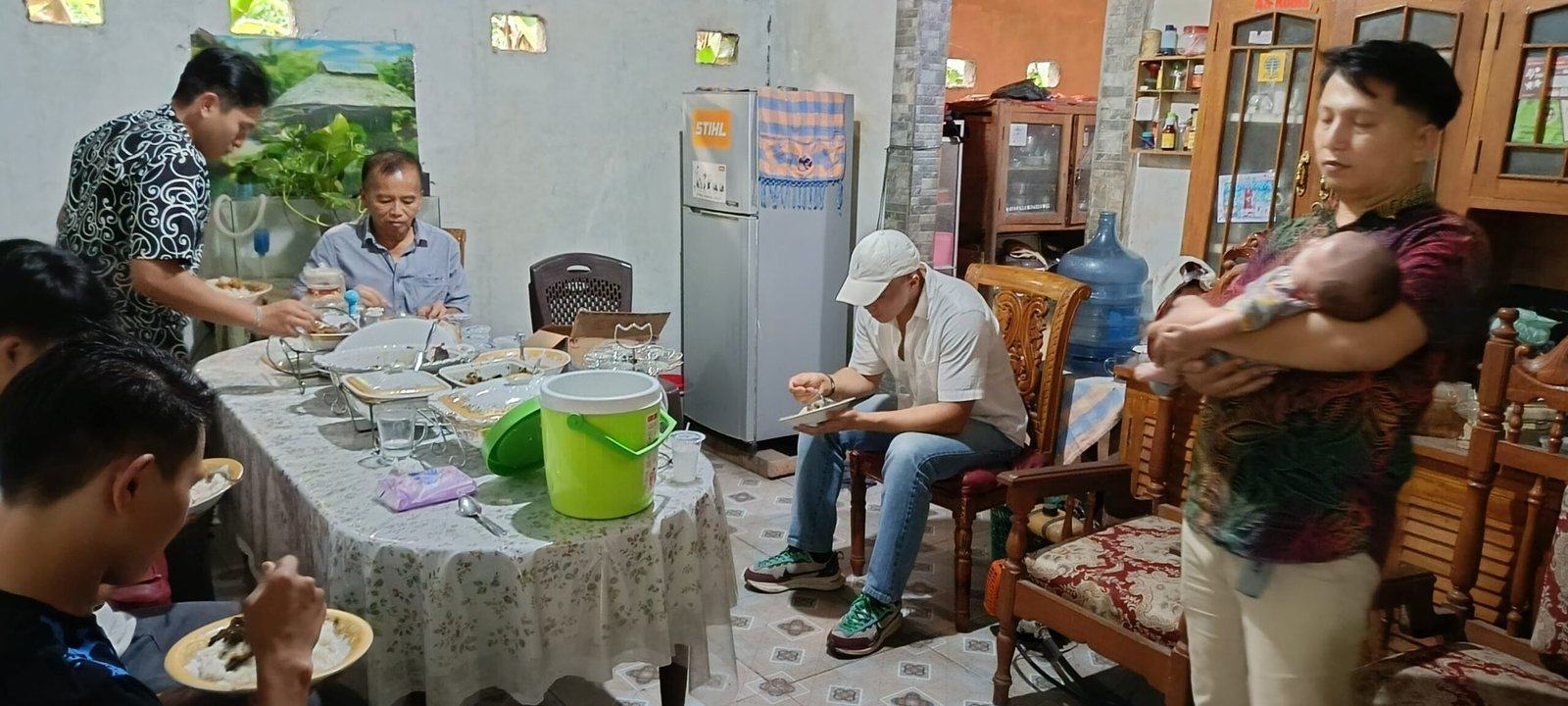
There we visited my teacher friend, Severalen from the Saruan family.
We are colleagues at SMKS Kristen 2 Tomohon.
This gave the journey another layer.
The day was becoming a journey through my own professional and personal network.
One village connected me to an old friend.
Another to a former teaching connection.
Another to a fellow teacher.
And another to a student.
The Journey Into the Evening
By the time we left Tumpaan, it was already getting late.
We still wanted to continue to Koreng.
The purpose of this final visit was different.
We were not going simply to visit a friend.
We were trying to find the family of one of my students.
Koreng: Looking for Reyshacanri's Family
In Koreng, we planned to visit Reyshacanri at his grandfather’s house, from the Rumengan family.
His grandfather is his father’s father.
Reyshacanri and his parents actually live in another village in Minahasa Selatan.
But for Pengucapan Syukur, they had planned to celebrate in Koreng, the village of his father’s family.
That explained why finding them was not easy.
Not many people in the village knew the student by his current name or knew exactly where the family would be celebrating.
A House That Was Difficult to Find
We tried to phone them.
But the calls did not work.
So we began asking people in the village.
Again.
And again.
And again.
This is another reality of travelling during Pengucapan Syukur.
The village may be familiar to the family.
But for an outsider trying to find one particular house, it can become a small adventure.
Eventually, people recognised the family name and helped us identify the house.
But there was a problem.
They had already left.
We Arrived Too Late
By the time we finally found the house, Reyshacanri and his family were already on their way back to Tomohon.
They were travelling by motorcycle.
It was already late.
And the following day was important.
Monday was the first school day of the new semester.
Reyshacanri needed to be back in Tomohon for school.
So, after searching for the house for so long, we had missed them.
We tried calling several times.
There was no answer.
They were already on the road.
A Family We Had Never Met
Yet something unexpected happened while we were looking.
We were welcomed by a family we had never met before.
They did not know us.
We did not know them.
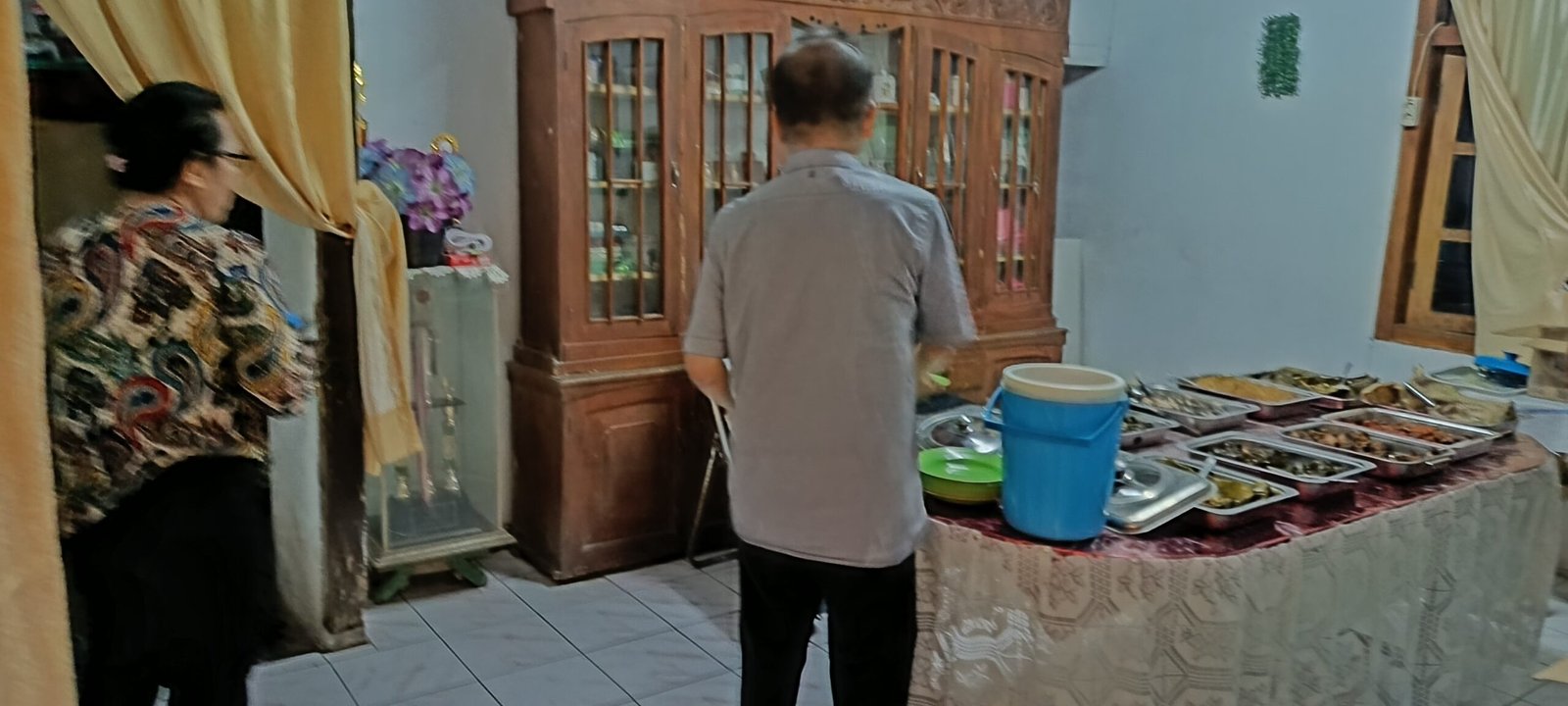
But they welcomed us.
This spontaneous hospitality became one of the most memorable encounters of the day.
We had travelled to Koreng looking for one family.
Instead, another family opened its door to us.
The Hospitality of a Village
This is perhaps one of the most beautiful things about Pengucapan Syukur.
Hospitality does not always require a previous relationship.
Sometimes it begins simply because someone arrives.
A visitor.
A friend.
A stranger.
Someone looking for a house.
Someone who has travelled from another village.
The door opens.
The table is offered.
Food is shared.
And for a moment, the visitor becomes part of the household.
Four Villages, Four Encounters
Looking back, the journey became a beautiful sequence of relationships.
Tewasen
The Talumepa family — Yudi, Anne and their children, including my baptized son Mikelan. And, although I had hoped to meet him later in the day, the journey ended with me leaving Tewasen without seeing my old colleague and friend Rommie.
Karimbouw
The Runtunuwu family — Jerry, connected to our school through his university teaching practice, and his mother’s unforgettable homemade dodol.
Tumpaan
The Saruan family — my teacher friend Severalen, another connection through SMKS Kristen 2 Tomohon.
Koreng
The Rumengan family — the family of my student Reyshacanri, whom we unfortunately missed, but whose village nevertheless gave us an unexpected welcome.
Four villages.
Four stories.
Four different relationships with the people we met.
When the Journey Becomes Personal
This was not the kind of journey where I could simply say:
“I visited four villages in Minahasa Selatan.”
That would leave out the most important part.
I visited people.
I visited the home of a friend from my years working in tourism.
I visited the family of my baptized son.
I visited someone who had once trained as a teacher at my school.
I visited a fellow teacher.
And I tried to visit one of my students.
The geography connected the villages.
But relationships connected the journey.
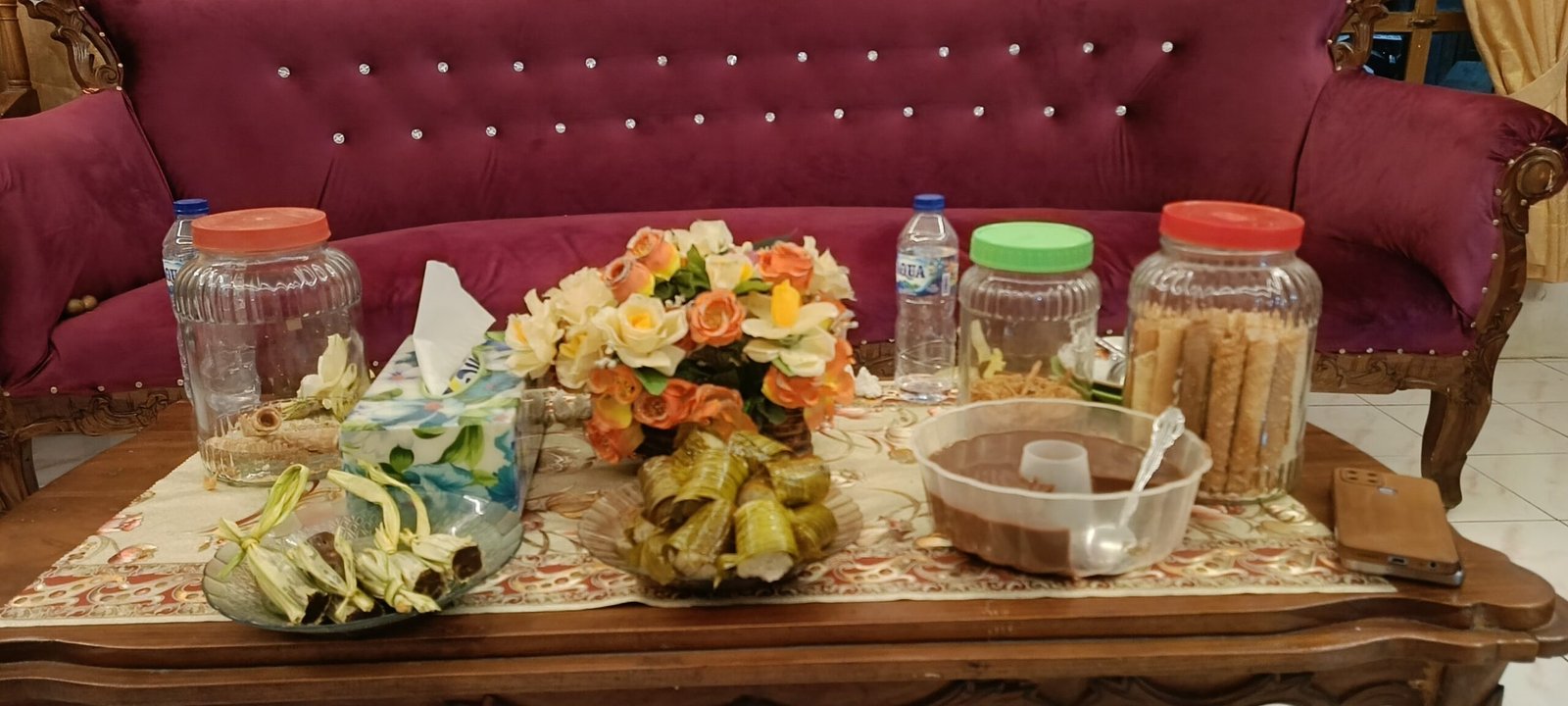
Food as Memory
The food we encountered throughout the day was equally important.
Nasi jaha.
Dodol.
But especially the homemade dodol at the Runtunuwu family home.
When we eat such food during a celebration, we are not simply tasting ingredients.
We are tasting a moment.
The food becomes attached to:
a house,
a family,
a conversation,
a village,
and a particular Sunday.
That is why food memories can last much longer than the meal itself.
The Gifts That Travel Home
At Pengucapan Syukur, food often becomes a gift.
The visitor eats at the table.
Then the host gives something to take home.
This creates a beautiful continuation:
the celebration travels with you.
The food leaves the village.
But the story remains connected to the village.
The Teacher Who Became a Traveller
As a tourism teacher at SMKS Kristen 2 Tomohon, I often encourage students to understand that tourism is about more than visiting attractions.
This Sunday gave me another opportunity to experience that lesson personally.
There were no formal tourist attractions on our itinerary.
Instead, there were:
family homes,
village roads,
wooden houses,
coconut plantations,
clove trees,
food on family tables,
and people who opened their doors.
That is also tourism.
Perhaps it is the kind of tourism that deserves more attention.
The First Pengucapan Syukur of the Season
This was my first Pengucapan Syukur journey of 2026.
And perhaps the greatest lesson was that the celebration cannot be understood from one table alone.
It is spread across villages.
Across families.
Across generations.
Across roads.
Across kitchens.
Across relationships.
And sometimes, even across a house that you cannot find.
DID YOU KNOW?
Pengucapan Syukur is a journey through relationships
For many Minahasan families, the thanksgiving season is an opportunity to return to family villages, visit friends, reconnect with relatives and welcome guests.
The celebration therefore creates a remarkable network of movement between Tomohon, Minahasa and neighbouring regencies.
DID YOU KNOW?
Nasi Jaha is more than a celebration food
During Pengucapan Syukur, nasi jaha can be part of the shared meal and also a gift for visitors to bring home.
In this way, the food becomes both hospitality and memory.
DID YOU KNOW?
A village can be part of the food story
The coconut and clove plantations surrounding the villages we travelled through are part of the agricultural landscape behind Minahasan food culture.
The table begins long before the food reaches the kitchen.
It begins with land, farmers and seasons.
DID YOU KNOW?
Sometimes the Most Meaningful Host Is a Stranger
In Koreng, we went looking for the Rumengan family.
We did not find them in time.
Instead, a family we had never met welcomed us.
It was an unexpected encounter—but perhaps one of the clearest expressions of hospitality we experienced that day.
THE RHYTHM OF PENGUCAPAN SYUKUR
A Sunday.
Four villages.
Many houses.
Old friends.
New encounters.
Nasi jaha.
Dodol.
Coconut and cloves.
Wooden houses.
Open doors.
One long road home.
WHAT THIS JOURNEY TAUGHT ME
1. Sometimes changing the itinerary makes the journey better.
Our original plan began with Karimbouw.
Hunger changed everything.
Tewasen became our first stop — and gave us a deeply personal family encounter.
2. Local advice matters.
Yudi’s warning about heavier traffic later in the day helped us make the decision to leave Tewasen and continue to Karimbouw sooner.
3. Food remembers people.
I will remember Karimbouw partly because of the wonderful dodol made by Jerry’s mother.
4. Schools create unexpected community networks.
Jerry, Severalen and Reyshacanri connected the journey to my work as a tourism teacher.
5. Not every planned encounter happens.
I had hoped to meet Rommie in Tewasen later that day.
Instead, we had to leave earlier.
In Koreng, we eventually found the Rumengan family house — but Reyshacanri and his father had already left.
And that is also part of travelling.
6. Hospitality can begin with strangers.
In Koreng, we were welcomed even though we were looking for another family.
FROM TEWASEN TO KORENG
A Sunday of friendship, food and open doors
Tewasen brought me back to an old friendship and to the family of my baptized son.
Karimbouw gave me the first nasi jaha of the day — and an unforgettable taste of homemade dodol.
Tumpaan brought me together with a fellow teacher.
Koreng became a search for a student’s family that ended in an unexpected encounter with strangers.
And throughout the journey, the landscape remained constant:
coconut trees,
clove plantations,
traditional wooden houses,
village roads,
and homes filled with food.
THE RHYTHM OF THE YEAR
Pengucapan Syukur · 12 July 2026
Perhaps Pengucapan Syukur is best understood not as one celebration, but as a rhythm.
A rhythm of returning.
A rhythm of visiting.
A rhythm of cooking.
A rhythm of opening doors.
A rhythm of sharing.
A rhythm of giving.
And a rhythm of remembering.
Every village has its own tables.
Every family has its own stories.
Every house has something to offer.
And every visitor leaves carrying something.
Sometimes it is food.
Sometimes it is a story.
Sometimes it is a friendship.
Sometimes it is simply the memory of having been welcomed.
A SUNDAY OF OPEN DOORS
Four villages · Many tables · Many relationships · One season of gratitude
On 12 July 2026, we left Tomohon with an itinerary.
We returned with something much more valuable.
We returned with the taste of homemade dodol.
With nasi jaha wrapped as a gift.
With memories of old friends.
With encounters with families.
With the landscape of coconut and clove plantations.
With the memory of traditional wooden houses.
With the memory of an old friend we hoped to meet but had to leave behind.
With the memory of a family we never found in time.
And with the hospitality of people who welcomed us anyway.
Perhaps this is what meaningful travel really is.
Not simply reaching every destination on the list.
But allowing the people we meet to become part of the journey.
Sometimes the most meaningful journey is not the one where we find every house or meet every person we planned to visit, but the one where another door opens unexpectedly.
FROM HOUSE TO HOUSE
From Tewasen to Karimbouw, Tumpaan and Koreng
12 July 2026 · Minahasa Selatan
“Sometimes the destination is not the house you were looking for. Sometimes it is the door that opens for you.”
Article Information
Volume: VII — The Rhythm of the Year
Section: Annual Celebrations
Category: Pengucapan Syukur
Title: A Sunday of Open Doors
Subtitle: From Tewasen to Karimbouw, Tumpaan and Koreng
Date: 12 July 2026
Region: Minahasa Selatan, North Sulawesi
Starting point: Tomohon
Villages visited: Tewasen · Karimbouw · Tumpaan · Koreng
Families: Talumepa · Runtunuwu · Saruan · Rumengan
Travel: Rental car with friends
Food: Nasi Jaha · Dodol
Landscape: Coconut plantations · Clove plantations · Traditional wooden houses
Themes: Pengucapan Syukur · Hospitality · Foodways · Friendship · Family · Teacher & Student Encounters · Meaningful Travel · Slow Travel · Living Traditions
Related Articles
This article would work especially well alongside:
The Rhythm of the Year in North Sulawesi
Discover the annual cycle of celebrations, harvests, festivals and community gatherings.
The Community Table — Every Sunday
Understanding why Sundays become days of gathering, open houses and shared food.
Living Traditions of Minahasa
The cultural practices that continue through generations.
Nasi Jaha: Food Cooked in Bamboo
A deeper gastronomy story about one of the foods encountered during the journey.
The Landscape of Taste
How coconut, cloves, gardens and volcanic land shape Minahasan food culture.
Encounters That Become Memories
Why unexpected human encounters often become the most memorable part of a journey.
The First Mapalus Table: Many Hands, One Table
From traditional hospitality to a new gastronomic gathering in Tomohon.
“Sometimes the destination is not the house you were looking for.
Sometimes it is the door that opens for you.”
A SUNDAY OF OPEN DOORS
From Tewasen to Karimbouw, Tumpaan and Koreng
12 July 2026 · Minahasa Selatan
A first Pengucapan Syukur journey through four villages, following friendships, family connections, Sunday journey through friendship, food and the extraordinary hospitality found behind Minahasan doors.