
From Family Reunion to Village Encounters: The Second Pengucapan Syukur
Sunday, 19 July 2026 · Minahasa Tenggara & Tondano · North Sulawesi
A Sunday journey through Watuliney, Kalait, Liwutung and Tondano
There Are Journeys That Begin with a Destination.
There are journeys that begin with an invitation.
And there are journeys that begin with family.
On Sunday, 19 July 2026, I set out with friends in a rental car for my second Pengucapan Syukur journey of the 2026 season.
Our route was ambitious:
Watuliney → Kalait → Liwutung → Tondano.
We planned to begin with a family reunion in Watuliney, continue to the remote village of Kalait to visit students and former students, stop at Liwutung to visit a former student, and finally reach Tondano to attend the baptism celebration of my teacher friend Eko’s first son.
It sounded like a long day.
It turned out to be much longer than we expected.
But it also became one of those journeys where the road itself becomes part of the story.
Section: Annual Celebrations
Category: Volume VII — The Rhythm of the Year
Experience: Pengucapan Syukur · Family Reunion · Student Encounters · Village Hospitality · Traditional Food · Slow Journey
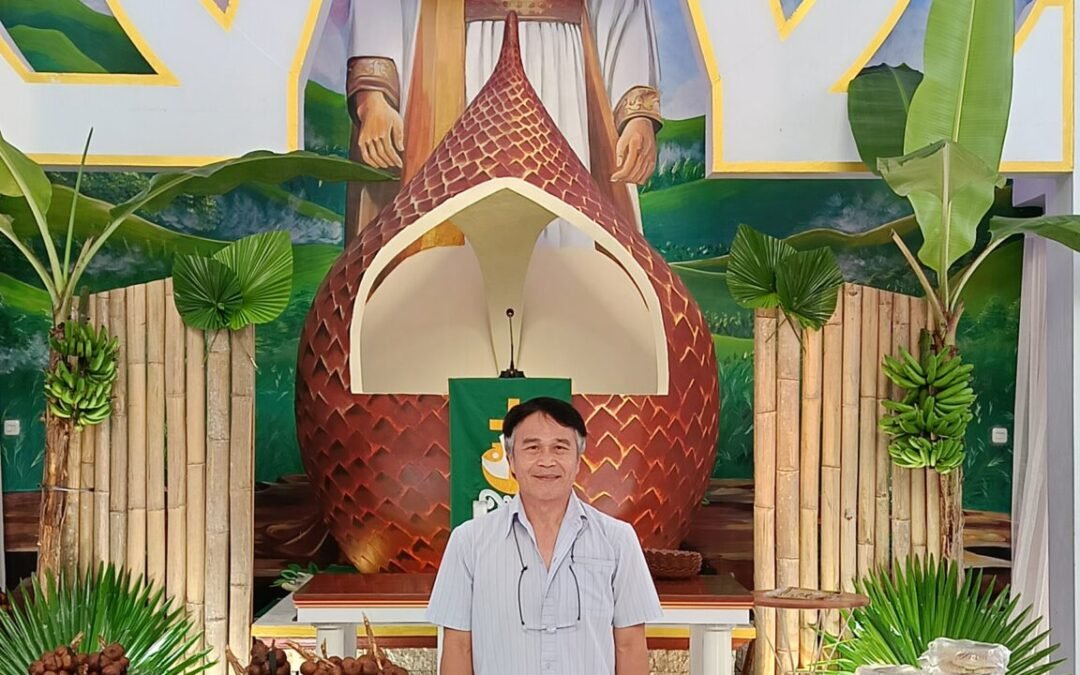
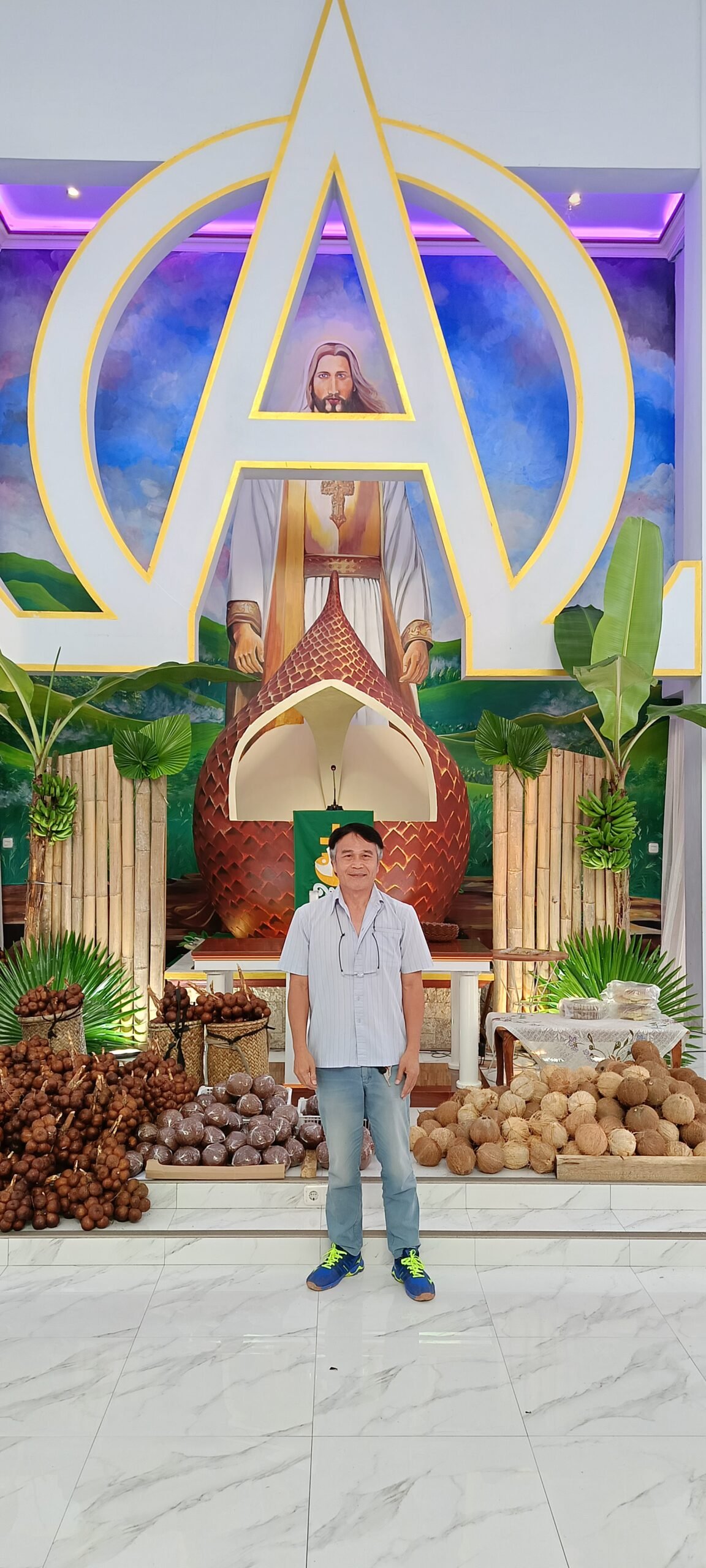
A Stop in Pangu: A Church Decorated With Salak
Before continuing toward Watuliney, I asked my friends to stop in Pangu, a village well known for its salak, or snake fruit.
But I was not stopping to buy fruit.
I wanted to see the church.
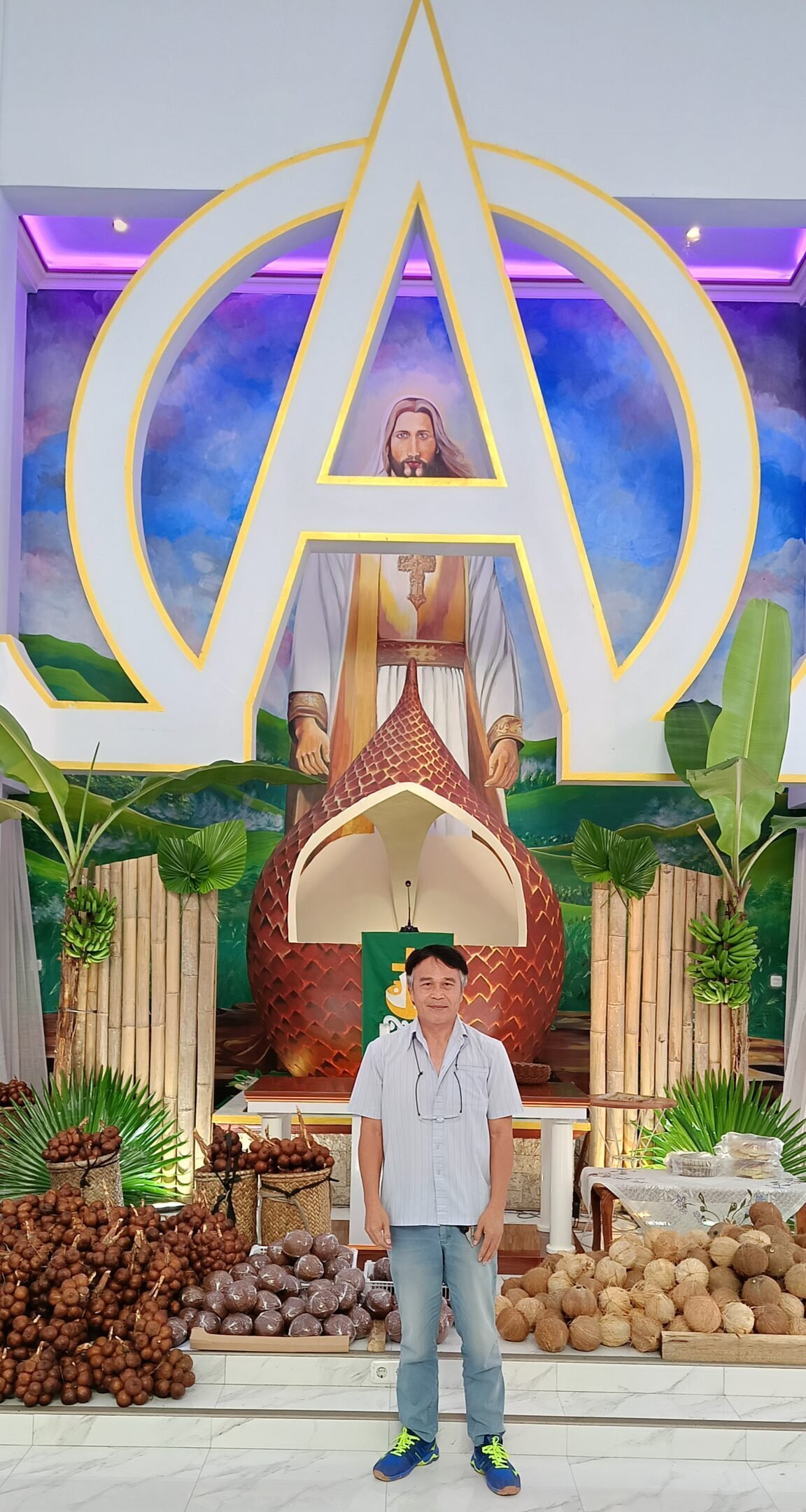
I had heard about the way the church was decorated during the Pengucapan Syukur season, and I was curious to see it for myself.
When we arrived, I was warmly welcomed by a friendly man who may have been the pastor of the church.
He invited me inside and accompanied me as I looked around.
What caught my attention was the altar.
It was decorated with salak and other fruits, including bananas and coconuts.
The fruits were not simply agricultural products.
They had become part of the visual language of thanksgiving.
The harvest had entered the church.
The landscape had entered the celebration.
And the food of the village had become part of an expression of gratitude.
The man then invited me to stand in front of the church.
He took photographs of me.
Actually, several photographs.
It was a small encounter, but it reminded me once again that during Pengucapan Syukur, even an unexpected stop can become part of the journey.
First Destination: Watuliney
From Pangu, we continued toward Watuliney, a village close to the sea.
This was the first major destination of the day.
But this was not simply another village visit.
It was a family reunion.
We were visiting the Logor–Pijoh family, at the home of my niece, Rifka Pijoh.
Her father is my mother’s younger brother.
So this first stop connected the journey directly to my own family.
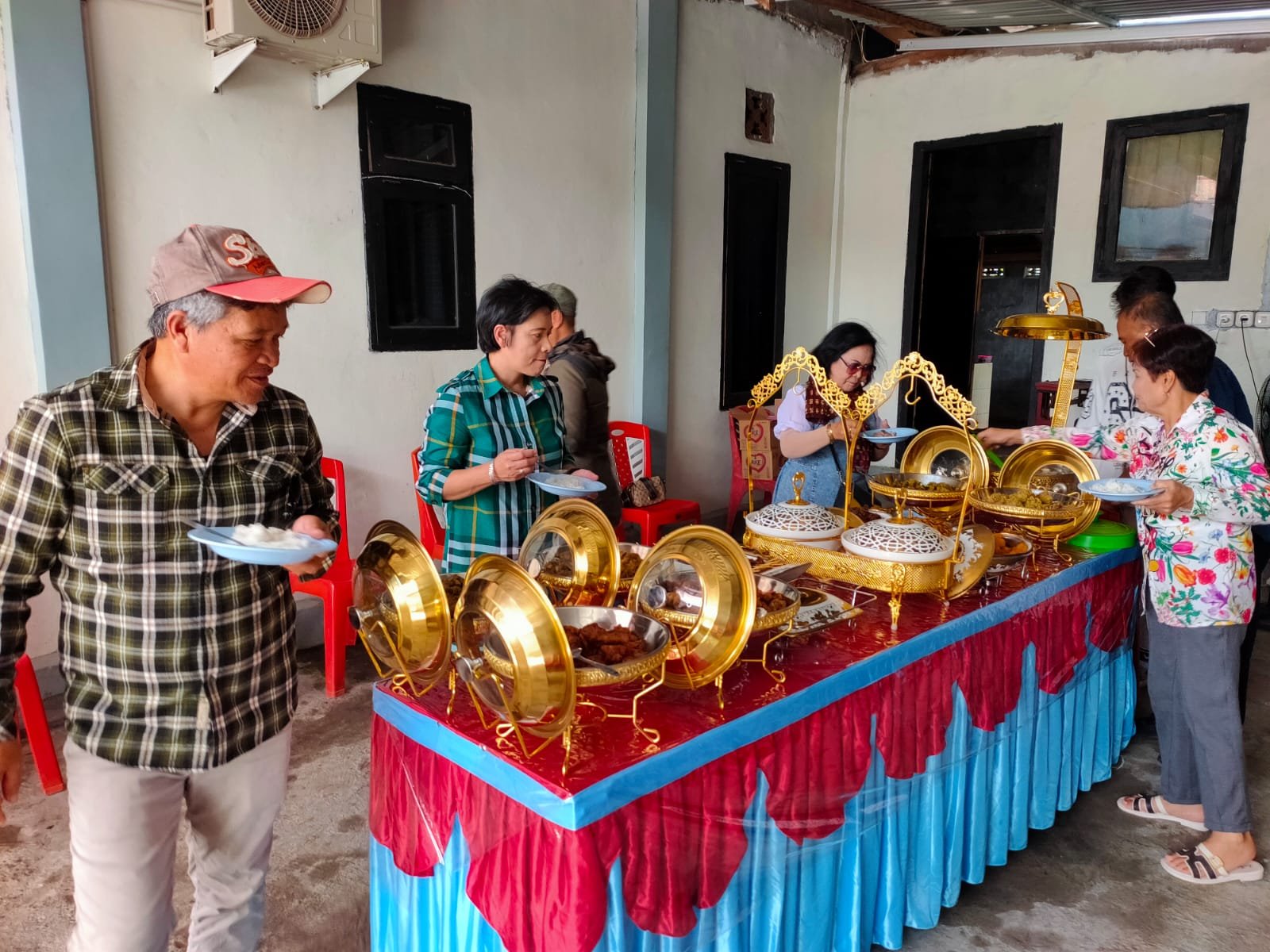
When we arrived, my aunties Anna and Keke, my mother’s younger sisters, were already there.
The reunion immediately became part of the Pengucapan Syukur atmosphere.
Family members.
Food.
Conversation.
Memories.
And, of course, a table prepared for visitors.
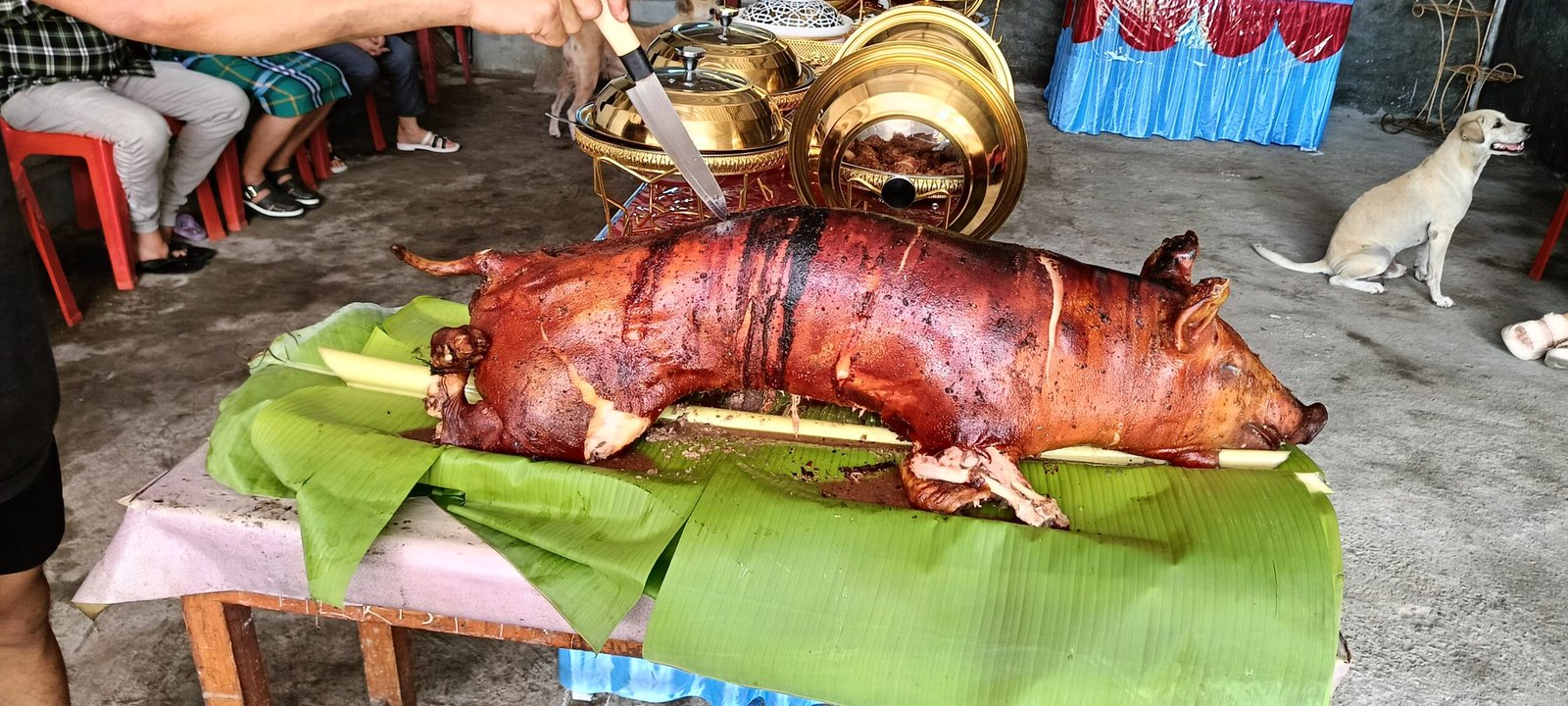
Babi Putar on the Table
Among all the dishes that afternoon, one immediately stood out:
babi putar.
The dish became one of the memorable highlights of the Watuliney table.
Pengucapan Syukur tables often tell stories through abundance.
There may be many dishes, but certain foods become the dish everyone remembers.
At Watuliney, for me, that dish was babi putar.
As always during this season, food was not simply served to us.
It was shared.
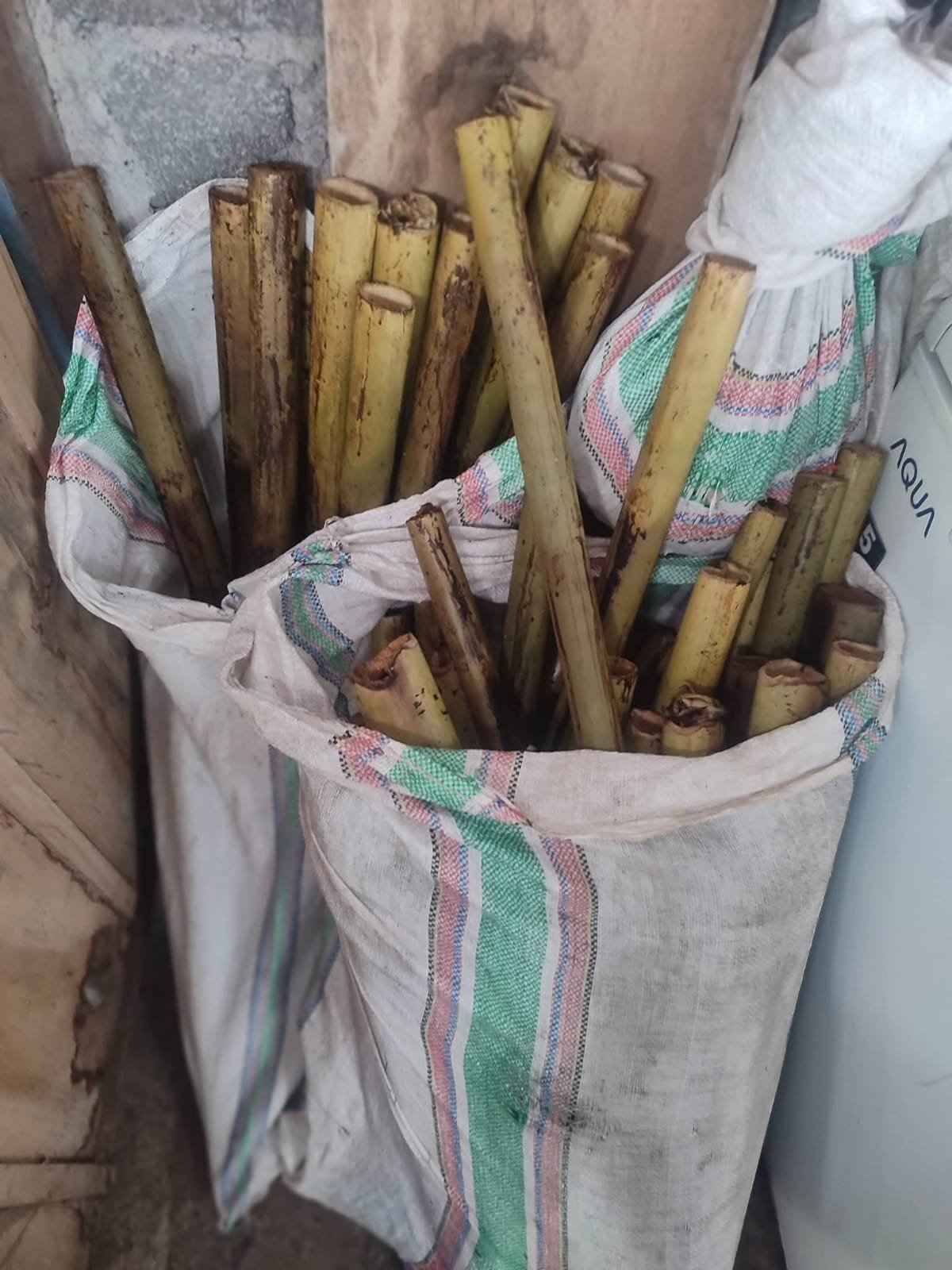
And before leaving, we received dodol and nasi jaha to take home.
Another house.
Another table.
Another gift.
Another story.
From the Sea Toward the Highlands
After Watuliney, our journey became more adventurous.
Our next destination was Kalait.
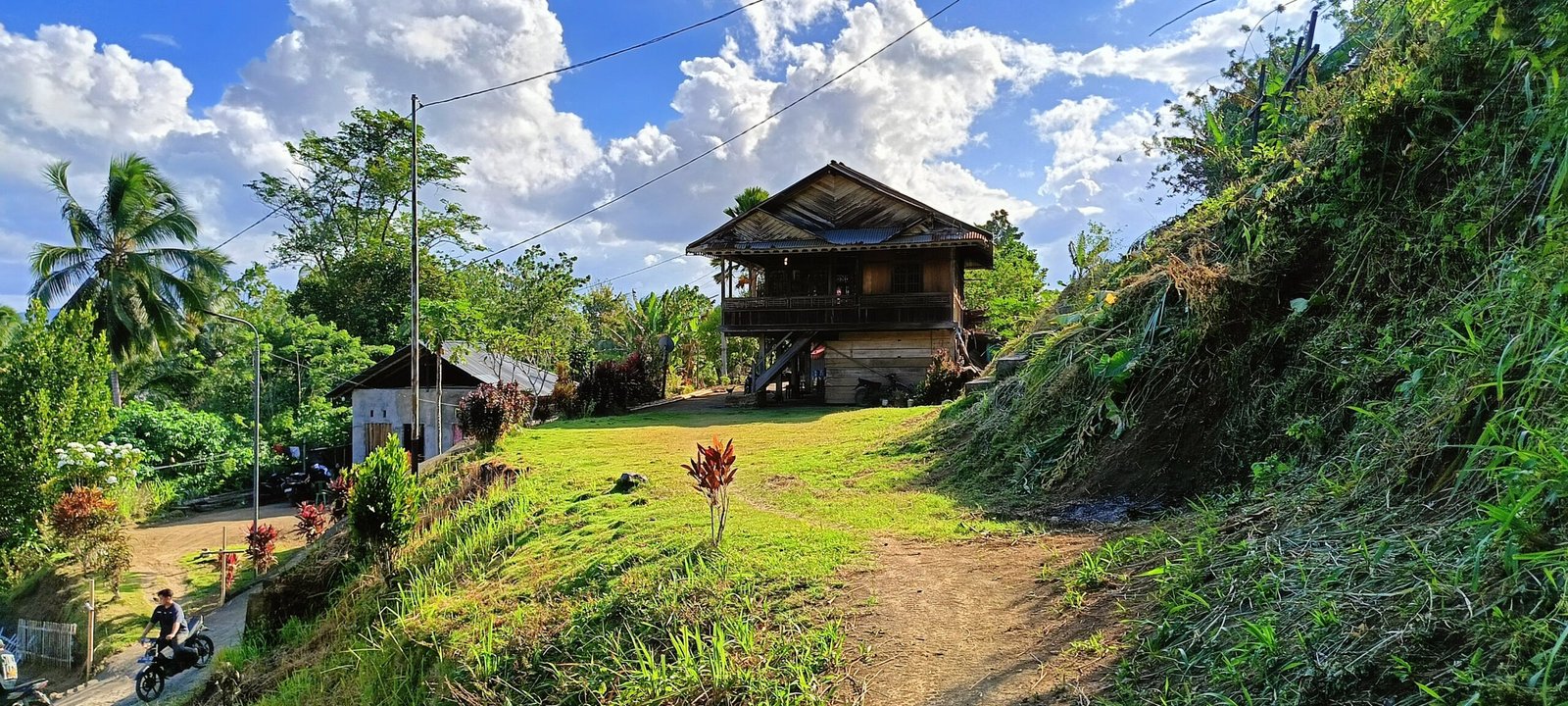
Kalait is far away, tucked among landscapes of jungle, coconut trees and clove plantations in Minahasa Tenggara.
I had visited the village before, several years ago, when I brought guests on a Minahasa journey.
But that time, we had approached the village from the opposite direction.
This time was different.
And I was trusting one of my friends to lead the way because he had visited Kalait during the previous year’s Pengucapan Syukur.
Perhaps he had forgotten the route.
We will simply say that the road had its own ideas.
The Wrong Turn
At one point, we reached a T-junction.
We turned left.
It seemed reasonable.
But eventually we realized that we were heading toward another village:
Bunaq.
The road to Bunaq became increasingly narrow and rough.
We decided not to continue down that road.
Instead, we stopped and asked for directions.
There were two possibilities.
We could return to the T-junction and take the other road.
Or we could continue forward through another village.
We chose the second option.
And that decision gave us an unforgettable drive.
A Road Through the Forest
The road became extremely narrow.
Several times, we encountered cars coming from the opposite direction.
There was hardly enough space.
Sometimes we had to negotiate carefully to pass one another.
It was frightening.
The road was unfamiliar.
But at the same time, the scenery was beautiful.
Coconut trees.
Clove trees.
Dense vegetation.
Mountain landscapes.
Remote villages.
And the feeling that we were travelling through a part of Minahasa that few visitors experience.
This is one of the contradictions of slow travel.
The road can be difficult.
The journey can be uncertain.
And yet those very moments can reveal landscapes that would otherwise remain unseen.
Finally, Kalait
Eventually, we reached Kalait.
And the village was alive.
The atmosphere was animated.
People were moving between houses.
Families were receiving visitors.
Tables were full.
The Pengucapan Syukur spirit was everywhere.
Our journey had taken longer than expected.
But we had arrived.
And now began a remarkable sequence of house-to-house encounters.
The First House: Drayfain and the Masambe Family
Our first visit in Kalait was to the home of Drayfain, from the Masambe family.
Drayfain is a student whom I know through my work at SMKS Kristen 2 Tomohon.
It is important to clarify that the students we visited in Kalait are not my own students from the Tourism Business Department.
I teach Tourism in the Tourism Business Department.
The students we visited in Kalait are students from the Nursing and Health Care Department.
But being part of the same school creates another kind of relationship.
They are still part of our school community.
And during Pengucapan Syukur, the relationship between teacher and student can extend beyond the classroom.
At Drayfain’s home, we met his father and grandmother.
We ate.
We talked.
And, as often happens during this season, we were encouraged to take food home.
We received nasi jaha, dodol and other dishes.
A Grandmother's Invitation
Then came an unexpected invitation.
Drayfain’s grandmother insisted that we visit her house somewhere else in the village.
Her husband was there.
She wanted us to meet him.
We agreed.
But before continuing, there was something I noticed about the family.
Drayfain’s mother had passed away.
His grandparents had taken an important role in his life.
His grandfather told us that he was supporting Drayfain’s education.
That information changed the atmosphere of the visit for me.
This was no longer simply a student visit.
It became a human encounter.
The Second House: Rama and the Sumilat Family
Our second house was the home of Rama, from the Sumilat family.
Rama is a friend of a friend.
He had previously studied in Tomohon and was now studying at a university in Manado.
There was also an interesting connection with Tomohon.
His father told us that Rama had been born in Tomohon.
For him, that was a reason not to forget the city.
Despite the considerable distance between Kalait and Tomohon, the connection remained.
And then something happened that marked this house as a particularly memorable stop:
This was the first house to serve us Bintang beer.
The table continued to grow.
We were given nasi jaha and dodol.
And then came another unexpected gift.
A half sack of coconuts.
The Pengucapan Syukur gifts were becoming increasingly difficult to fit into the car.
The Third House: The Karuh Family
Our third visit was to the Karuh family.
There were many people gathered there.
The house was lively.
And then came a surprise.
Among the people gathered around the house was Altje.
I knew her from somewhere else.
She had once lived in the same village as me:
Matani, Tomohon.
What were the chances?
We had travelled all the way to Kalait and encountered someone from my own neighbourhood history.
She now lives with her husband in another village in Tomohon.
But she and her husband know many people in Kalait and often visit the village during Pengucapan Syukur and other celebrations.
Altje told me something interesting about Kalait.
The people there enjoy welcoming visitors.
And they like to give visitors food as souvenirs.
Suddenly, our increasingly full car made perfect sense.
When Two Worlds Meet Again
Meeting Altje at Kalait reminded me of something important about travel.
A village may seem remote on a map.
But human connections rarely follow maps.
Someone from Tomohon can appear in Kalait.
A former student can lead us to another family.
A family member can introduce another family.
A road can lead to the wrong village.
And a wrong turn can lead to a surprising reunion.
The geography may be remote.
The relationships are not.
The Fourth House: The Sangkaeng Family
Our fourth visit in Kalait was the Sangkaeng family.
Their son, Dirly, had graduated from SMKS Kristen 2 Tomohon and was now studying at a nursing academy in Tomohon.
Again, the connection was through education.
Again, the school had extended beyond its physical campus.
And again, the table was waiting.
We received:
nasi jaha,
dodol,
and ikan woku wrapped in a woka leaf.
The woka leaf wrapping was particularly beautiful.
It reminded us that traditional presentation is itself part of gastronomy.
The leaf is not merely packaging.
It is part of the story.
An Unexpected Reunion at Dirly's House
And this was where the earlier surprise became even stranger.
Altje was there.
The same person we had unexpectedly encountered at the Karuh family house.
Now we met again at the Sangkaeng family home.
It felt as if Kalait were repeatedly connecting pieces of my past and present.
Former neighbours.
Students.
Families.
Friends.
Tomohon.
Minahasa Tenggara.
All around the same Pengucapan Syukur table.
The Last House in Kalait
But we still had one more visit to make.
We had promised Drayfain’s grandmother that we would visit her and her husband.
Their home was located at the end of the village, away from the main village centre.
Interestingly, if approaching Kalait from the opposite direction, their house would be among the first houses encountered.
It was another reminder of how different the village looks depending on which road you take.
We finally reached the house.
A Grandfather's Story
Drayfain’s grandfather told us about his grandson.
His daughter—Drayfain’s mother—had passed away.
He had taken responsibility for supporting his grandson’s education.
Listening to him, I felt deep compassion.
There are moments when the role of teacher becomes much larger than teaching.
We are sometimes asked to look after young people who are far from their families.
We are sometimes entrusted with a small part of their future.
And that afternoon, Drayfain’s grandmother asked us to take care of her grandson while he is studying in Tomohon.
My answer was immediate:
Of course.
A Promise Between a School and a Family
The grandmother’s request stayed with me.
It was not an official school responsibility.
It was not written in a document.
It was simply a grandmother asking someone she trusted to watch over her grandson.
I hope that I can meet them again someday.
And I hope that Drayfain will continue his education successfully.
The visit ended with another generous offering:
nasi jaha, dodol, and a large bottle of traditional cap tikus.
Once again, we had more gifts to carry.
The car was becoming a moving Pengucapan Syukur table.
The Road Out of Kalait
By the time we left Kalait, it was already evening.
The village slowly disappeared behind us.
The forest.
The coconut trees.
The clove trees.
The narrow roads.
The houses.
The many tables.
The people who had welcomed us.
And the gifts filling the car.
We had originally intended to visit several homes.
Instead, Kalait had given us an entire sequence of encounters.
And there was still one more village.
Liwutung: A Former Student
We continued toward Liwutung.
By now, it was already getting late.
But I had promised to visit Meyfiani, a former student.
Unlike the students we had visited in Kalait, Meyfiani is my former student from Tourism.
She belongs to the Ronsul family.
Even though the hour was late, we stopped.
A promise to a former student matters.
We were welcomed and received some traditional gifts.
As with every house during this Pengucapan Syukur journey, there was food on the table.
And once again, we had to eat.
When the Car Becomes Full
By now, our rental car was almost a small warehouse of Pengucapan Syukur gifts.
From Watuliney:
nasi jaha and dodol.
From Kalait:
nasi jaha, dodol, traditional snacks, dishes, coconuts, ikan woku, and more.
From the grandparents:
nasi jaha, dodol and cap tikus.
From Liwutung:
traditional gifts.
There is a point during these journeys when you realize that you can no longer simply ask:
“Where should we put this?”
The entire car has become part of the celebration.
The Final Destination: Tondano
But the day was not supposed to end in Liwutung.
We still had another destination:
Tondano.
Our teacher friend Eko had invited us to the baptism celebration of his first son.
We had promised to come.
So, despite the late hour, we continued toward Tondano.
We arrived at around 10 p.m.
But the celebration was already over.
A Party Already Finished
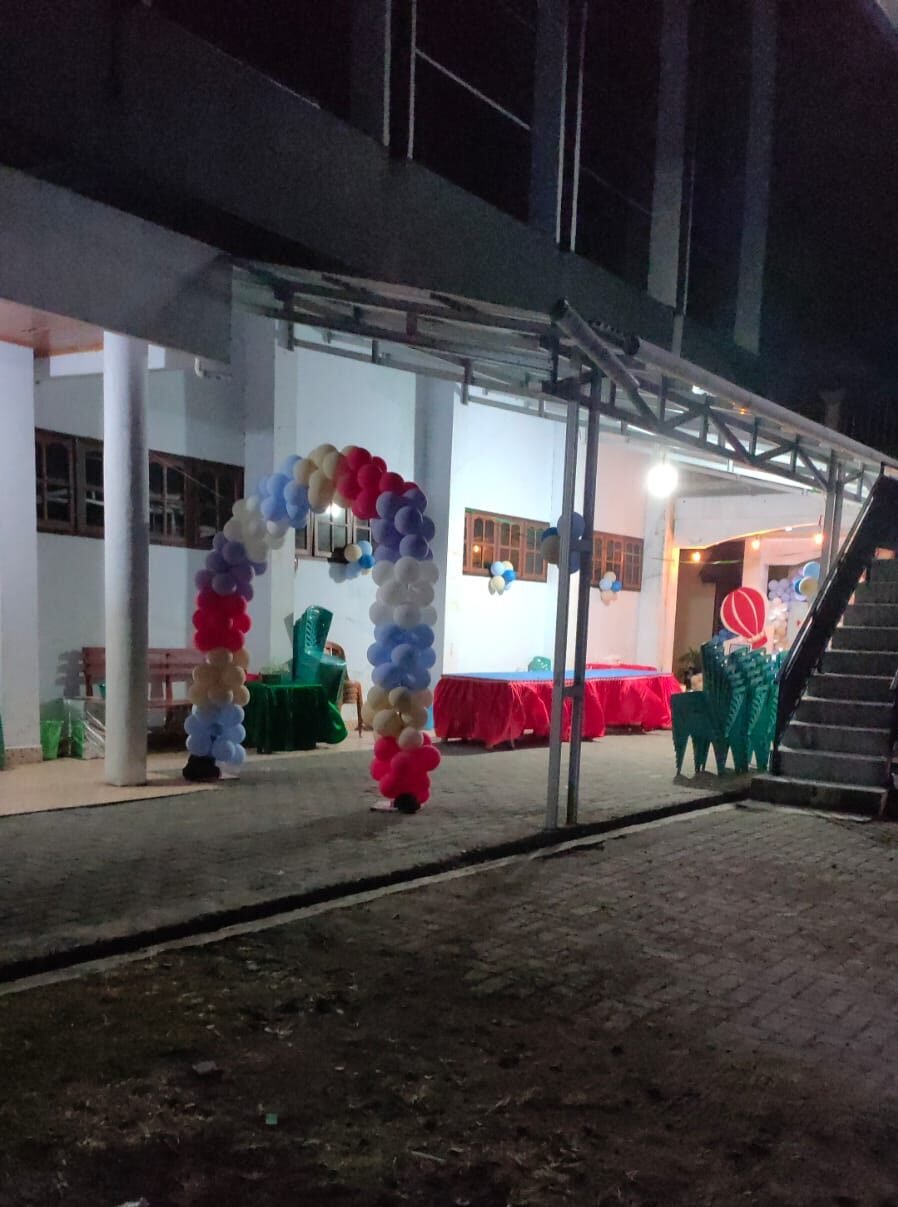
The baptism celebration had taken place at the church parsonage.
Eko’s mother is a pastor, and the family stayed in the pastor’s house behind the church.
By the time we arrived, the celebration had finished.
We had missed it.
After such a long journey, this was a disappointing ending.
We had intended to be there.
We had promised.
But the road, the distance, the village visits and the unexpected encounters had taken much longer than expected.
We returned to Tomohon with a feeling of guilt that we had not arrived earlier.
But there was also another feeling.
Gratitude.
A Journey That Could Not Be Timed
This day taught me again that Pengucapan Syukur does not follow a strict timetable.
A house may invite you to stay.
A grandmother may ask you to visit her home.
A table may be filled with food.
A former friend may suddenly appear.
A road may take you somewhere you did not intend to go.
And someone may insist that you take a sack of coconuts home.
You cannot always say:
“We have to leave now because our itinerary says so.”
At least, not if you want to experience the celebration as it is actually lived.
The Hospitality of Kalait
Among all the villages we visited that Sunday, Kalait left a particularly strong impression.
The village is remote.
The road can be difficult.
It is surrounded by forest, coconut plantations and clove trees.
But the welcome was extraordinary.
Every house seemed ready to receive visitors.
Every table seemed to have room.
And every family seemed willing to share something.
Food.
Stories.
Memories.
Or simply a place to sit.
Altje’s explanation helped us understand why.
The people of Kalait are accustomed to welcoming visitors during Pengucapan Syukur and other celebrations.
The hospitality is part of the village culture.
When the Gift Becomes the Memory
One of the defining characteristics of this second Pengucapan Syukur journey was the amount of food we received.
But the food itself is not the whole story.
A packet of nasi jaha carries the memory of a house.
Dodol carries the memory of a conversation.
A coconut carries the memory of a family saying:
“Take this home.”
Ikan woku wrapped in woka leaf carries the memory of the table where it was served.
The gifts become edible souvenirs.
But unlike souvenirs bought in a shop, these gifts come with relationships attached.
The Geography of Gratitude
Our journey covered several different landscapes.
Watuliney, close to the sea.
Kalait, remote among forest, coconut and clove plantations.
Liwutung, where a former student welcomed us in the evening.
Tondano, where we arrived too late for the baptism celebration.
The journey connected coast, village, plantation, school community, family and church.
It showed how Pengucapan Syukur moves through different layers of Minahasa life.
A Teacher's Journey Beyond the Classroom
As a teacher at SMKS Kristen 2 Tomohon, I often meet students inside a classroom.
But the relationships created at school do not always end when the school bell rings.
A student’s family becomes part of the story.
A former student’s home becomes a place of reunion.
A grandmother asks us to look after her grandson.
A former student invites us to her village.
The school community becomes connected to the wider community.
This is one of the things I value most about being involved in tourism education.
Tourism is ultimately about people.
And education is also about people.
A Different Kind of Tourism
A journey such as this is not an ordinary tourist itinerary.
We did not visit famous attractions one after another.
We visited:
a niece,
aunts,
students,
former students,
families,
friends,
a church,
and people we unexpectedly encountered along the way.
The destinations were human.
The food was part of the welcome.
The road connected the stories.
This is the kind of journey I believe deserves a place in the idea of slow travel.
From One Table to Another
The first Pengucapan Syukur journey had taken us through Tewasen, Karimbouw, Tumpaan and Koreng.
The second took us through Watuliney, Kalait and Liwutung, before ending unsuccessfully—but meaningfully—in Tondano.
Two Sundays.
Two journeys.
Many houses.
Many tables.
Many stories.
And a growing understanding of what Pengucapan Syukur means when experienced from inside the community rather than simply observed from outside.
The Table Was Never Empty
At every house, there was something to eat.
Sometimes the table was full of familiar dishes.
Sometimes there were traditional snacks.
Sometimes there was nasi jaha.
Sometimes dodol.
Sometimes ikan woku.
Sometimes something as simple as coconuts to take home.
But the most consistent ingredient was not food.
It was hospitality.
The Road We Almost Didn't Take
Perhaps the most memorable part of the journey was the road into Kalait.
We trusted a friend who had travelled there the previous year.
He may have forgotten the route.
We took the wrong turn.
We reached Bunaq.
We encountered a narrow and difficult road.
We had to ask for directions.
We chose to continue rather than return.
And eventually we arrived.
If we had followed the perfect route, we might have missed the experience.
That is one of the paradoxes of travel:
sometimes the wrong road becomes the right story.
A Second Sunday of Thanksgiving
The first Pengucapan Syukur journey taught us about open doors and unexpected encounters.
The second taught us about family, education, responsibility and the generosity of remote villages.
Together, the two Sundays began to reveal a larger picture.
Pengucapan Syukur is not one experience.
It is a season.
And every Sunday can reveal another part of it.
DID YOU KNOW?
Kalait Is Surrounded by Forest, Coconut and Clove Landscapes
The journey to Kalait takes travelers through remote landscapes where forest, coconut trees and clove plantations form part of the scenery.
The difficult roads are part of the challenge—but also part of the experience.
The landscape becomes especially meaningful when the destination is a village where hospitality is central to the celebration.
DID YOU KNOW?
Nasi Jaha Travels Home With the Guest
During Pengucapan Syukur, food is often not only eaten at the table.
Guests may receive food to take home.
On this journey, nasi jaha and dodol followed us from several houses.
The food therefore becomes both:
a meal shared in the moment
and
a memory carried home.
DID YOU KNOW?
A Village Can Become a Network of Relationships
In Kalait, a student led us to a family.
A grandmother invited us to another house.
A former neighbour from Tomohon unexpectedly appeared.
Another family was connected to a former student.
The village became a network of relationships rather than simply a geographic destination.
DID YOU KNOW?
Pengucapan Syukur Can Connect School and Community
The journey included current students, a former student, their families and a teacher’s friend.
It showed that school relationships can extend into village communities.
For tourism education, this is especially valuable.
Students are not simply names on a class list.
They come from families, villages, cultures and communities.
DID YOU KNOW?
The Church Can Become a Picture of the Harvest
At Pangu, I stopped to photograph a church decorated with salak, bananas and coconuts.
The decoration offered a simple visual message:
the harvest belongs in the thanksgiving.
The fruits of the land become part of the celebration.
WHAT I BROUGHT HOME
Not just food.
I brought home:
family memories from Watuliney.
The taste of babi putar.
Nasi jaha and dodol.
The memory of a difficult road into Kalait.
The hospitality of students and their families.
A grandmother’s trust.
A grandfather’s sacrifice for his grandson.
The surprise of meeting Altje again.
A half sack of coconuts.
Ikan woku wrapped in woka leaf.
A visit to a former student in Liwutung.
The disappointment of arriving too late in Tondano.
And above all:
another Sunday of gratitude.
A PROMISE TO DRAYFAIN'S FAMILY
Among all the encounters that day, one request continues to stay with me.
Drayfain’s grandmother asked us to look after her grandson while he studies in Tomohon.
Her grandson is far from home.
His mother is no longer there.
His grandparents have taken responsibility for his education.
And she trusted us.
My answer remains simple:
Yes.
We will look after him as part of our school community.
And I hope that one day I can return to Kalait and meet his grandparents again.
FROM WATULINEY TO KALAIT
The journey began with family.
It continued with students.
It became a road adventure.
It turned into a series of unexpected reunions.
It filled the car with food.
It ended with a missed baptism celebration.
And yet, somehow, it felt complete.
Because the purpose of the journey was never simply to reach every destination.
It was to visit, share, eat, listen and connect.
WHEN THE CAR BECOMES A TABLE
By the time we left Liwutung, our rental car was packed with gifts.
Nasi jaha.
Dodol.
Coconuts.
Traditional snacks.
Dishes.
Ikan woku.
And other food from the houses we had visited.
The car had become a moving expression of Pengucapan Syukur.
Every bag represented a house.
Every package represented a welcome.
Every food item carried a memory.
THE ROAD HOME
It was late when we finally turned back toward Tomohon.
Tondano had not worked out as planned.
We had missed the baptism celebration.
We felt guilty.
But the day had already given us something much larger than a successful itinerary.
It had given us family.
Students.
Former students.
Friends.
Unexpected reunions.
Remote villages.
Traditional food.
And extraordinary hospitality.
Sometimes a journey does not end exactly where we planned.
But it can still end with gratitude.
A SECOND SUNDAY, ANOTHER STORY
The Pengucapan Syukur season was only beginning.
And already, two Sundays had shown two very different faces of Minahasa hospitality.
The first journey took us from Tewasen to Karimbouw, Tumpaan and Koreng.
The second took us from Pangu to Watuliney, Kalait, Liwutung and Tondano.
Every village added something.
Every house added something.
Every table added something.
And every journey made the story of the season richer.
THE RHYTHM OF THE YEAR
Pengucapan Syukur is not a single day.
It is a rhythm.
A rhythm of Sundays.
A rhythm of families.
A rhythm of open houses.
A rhythm of food.
A rhythm of journeys.
A rhythm of giving.
A rhythm of receiving.
And perhaps most importantly:
a rhythm of remembering that gratitude is meant to be shared.
FROM ONE HOUSE TO ANOTHER
Watuliney → Kalait → Liwutung → Tondano
Family → Students → Former Student → Friend
Sea → Forest → Plantations → Highland Road
Table → Table → Table → A table we arrived too late to share
JOURNAL NOTE
The Rhythm of the Year · Pengucapan Syukur
My second Pengucapan Syukur journey of 2026 reminded me that travel can be an extension of relationships.
A family reunion became the beginning.
A difficult road became an adventure.
A student visit became a lesson in compassion.
A former neighbour became an unexpected reunion.
A grandmother’s request became a responsibility.
A former student’s home became another open door.
And a missed baptism celebration became a reminder that even meaningful journeys do not always go according to plan.
Perhaps that is precisely why they are worth remembering.
ONE SUNDAY. MANY TABLES.
Watuliney
Family.
Kalait
Students, grandparents, friends and unexpected reunions.
Liwutung
A promise to a former student.
Tondano
An invitation we arrived too late to accept.
And between them:
roads, forests, coconuts, cloves, churches, food and open doors.
INFORMATION ABOUT THE ARTICLE
Volume: VII — The Rhythm of the Year
Section: Annual Celebrations
Category: Pengucapan Syukur
Title: From Family Reunion to Village Encounters: The Second Pengucapan Syukur
Date: Sunday, 19 July 2026
Region: Minahasa Tenggara & Tondano, North Sulawesi
Villages / Places: Pangu · Watuliney · Kalait · Liwutung · Tondano
Travel Companions: Friends, travelling by rental car
Main Themes: Family · Education · Hospitality · Village Life · Gastronomy · Slow Travel
Food: Babi Putar · Nasi Jaha · Dodol · Ikan Woku · Traditional Snacks · Coconut
Landscape: Sea · Forest · Coconut Plantations · Clove Plantations · Village Roads
Cultural Experience: Pengucapan Syukur · Open Houses · Family Reunion · Community Hospitality
Related Articles
This article should connect naturally with other Journal stories:
From House to House: The First Pengucapan Syukur
The first Sunday journey through Tewasen, Karimbouw, Tumpaan and Koreng.
The Rhythm of the Year in North Sulawesi
Explore the annual cycle of celebrations, harvests, festivals and community gatherings.
Every Sunday: The Community Table
Discover why Sunday is such an important day for family gatherings, open houses, celebrations and shared food.
Living Traditions of Minahasa
Explore the traditions that continue to shape everyday life.
Nasi Jaha: Rice, Bamboo & Celebration
A deeper gastronomic story about the traditional bamboo-cooked rice encountered throughout the Pengucapan Syukur season.
Landscapes of Taste
Discover how coconut, clove, forest, gardens and volcanic landscapes influence Minahasa foodways.
Encounters That Become Memories
Stories of unexpected meetings and the people who transform a journey.
The First Mapalus Table: Many Hands, One Table
How the spirit of shared hospitality continues from traditional Minahasa tables into a new gastronomic experience in Tomohon.
“We left Tomohon with a route.
We returned with a collection of stories.”
THE SECOND PENGUCAPAN SYUKUR
A journey through family, education, food and hospitality
19 July 2026
“We left Tomohon with a route. We returned with a collection of stories.”